The proposed regional initiative aims to pool computing resources to help African researchers and developers build advanced AI models, as high infrastructure costs and limited access to specialised chips continue to constrain the continent’s AI ambitions.
Nigeria has proposed a regional artificial intelligence computing initiative with Kenya, Rwanda and Senegal that would allow the four countries to combine their computing resources to develop and run AI models that may be too demanding for any one country to handle independently.
The proposal was presented at the Build 2026 conference, held in Abuja on October 21 and 22, as policymakers, researchers, technology companies and development organisations examined ways to strengthen Africa’s capacity to develop and deploy artificial intelligence.
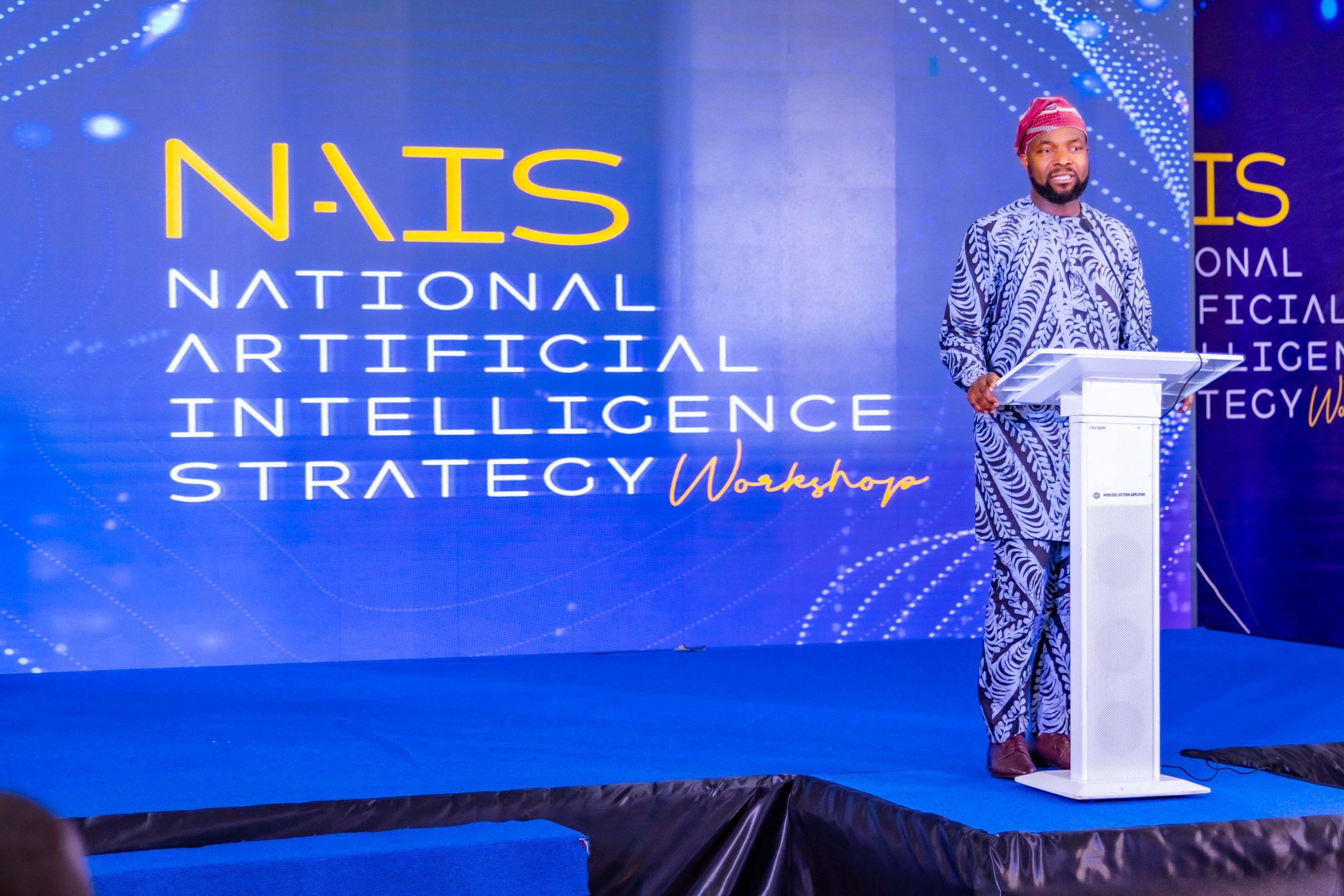
Nigeria’s Minister of Communications, Innovation and Digital Economy, Bosun Tijani, outlined the proposal in remarks delivered on his behalf by Olubunmi Ajala, national director of the National Centre for Artificial Intelligence and Robotics (NCAIR).
Under the proposed arrangement, Nigeria would connect its graphics processing units (GPUs) with computing resources available in the other countries, allowing researchers and developers to pool processing capacity for more demanding AI projects.
GPUs are specialised computer chips widely used to train and operate modern AI systems, including large language models that power chatbots, translation tools and other generative AI applications.
According to reporting by TheCable and Arise News, Tijani said the arrangement could enable participating countries to undertake computing tasks that exceed their individual capabilities by temporarily aggregating available resources.
However, the proposal remains at the planning stage, with no publicly confirmed implementation timetable or detailed agreement among the four countries established in the reports.
Addressing Africa’s AI infrastructure gap
The proposal comes as African governments and technology companies seek to expand their participation in the global AI industry but face significant barriers to accessing the infrastructure required to develop competitive systems.
Training advanced AI models requires substantial computing power, reliable electricity, high-speed internet connectivity, data centres and access to specialised chips. These resources can be expensive to establish and maintain, particularly for countries with limited infrastructure investment.
Tijani identified electricity supply, broadband connectivity, cloud computing and access to advanced semiconductors as major constraints on Nigeria’s AI ambitions.
He also highlighted difficulties in obtaining advanced AI chips amid global supply pressures, rising costs and geopolitical considerations affecting access to the technology.
Pooling computing resources could offer an alternative to requiring each participating country to independently finance and maintain infrastructure capable of supporting large-scale AI development.
Rather than building entirely separate systems, the countries could potentially make better use of existing computing facilities and allocate capacity to researchers, universities, startups and other approved users across national borders.
For African technology companies, access to affordable computing resources could reduce some of the financial barriers to developing AI applications for healthcare, agriculture, education, financial services and local-language communication.
The extent of these benefits, however, would depend on how much computing capacity becomes available, who can access it and what users would pay.
Why Nigeria is looking beyond its borders
Nigeria’s proposal reflects a broader recognition that the continent’s AI ambitions will depend not only on developing software and training talent but also on building the physical infrastructure needed to support innovation.
At the Abuja conference, speakers also discussed the economic consequences of relying heavily on foreign cloud computing providers.
Melanie Hui, chief executive officer of Luminate, cited research estimating that Nigeria’s dependence on foreign cloud infrastructure costs the country approximately $850 million annually.
The estimate, reported by Arise News, highlights concerns about how much African businesses spend on computing services provided by companies headquartered outside the continent. The figure should be understood as an attributed estimate rather than an independently verified measure of all foreign cloud expenditure.
Greater access to locally and regionally managed computing infrastructure could help African businesses retain more value within their domestic economies. It could also provide researchers with additional opportunities to develop systems tailored to African markets rather than relying exclusively on models and services developed elsewhere.
Nigeria has also been pursuing broader digital infrastructure initiatives, including fibre-optic expansion and a proposed data park involving neighbouring Togo.
According to reports from the conference, the proposed Nigeria-Togo project is intended to make use of available electricity capacity to support data infrastructure and computing services.
These efforts form part of a wider strategy to strengthen Nigeria’s position as a regional technology and digital services hub.
What shared computing could mean for African AI research
If implemented effectively, the proposed arrangement could expand opportunities for African researchers and developers who currently face high costs when training or experimenting with advanced AI systems.
One potential application is the development of large language models that better understand African languages, cultural contexts and local information needs.
Many African languages remain poorly represented in mainstream AI systems, limiting the usefulness of some tools for people who communicate primarily in local languages.
Researchers working on speech recognition, machine translation, agricultural advisory systems and educational applications could benefit from access to additional computing capacity, particularly when projects require more resources than individual institutions can afford.
Universities and startups could also potentially use shared infrastructure to experiment with open-source models, build specialised applications and test systems designed for local industries.
Nevertheless, access to computing power alone will not resolve the continent’s AI development challenges. Researchers also need high-quality datasets, technical expertise, reliable connectivity, funding and clear rules governing how AI systems are developed and deployed.
The proposed network’s success would therefore depend on whether computing resources are made accessible beyond government institutions and large technology companies.
The technical and governance challenges
Although the proposal offers a potential route towards regional cooperation, connecting computing resources across several countries would require substantial technical coordination.
Training large AI models across geographically distant facilities can be difficult because these workloads often require rapid, repeated communication between processors. Network delays and insufficient bandwidth can slow training or make some distributed computing arrangements impractical.
A functioning regional system would therefore require appropriate network capacity, compatible hardware and software, coordinated scheduling, reliable power supplies and technical teams capable of maintaining the infrastructure.
The participating countries would also need to determine how computing resources are allocated, how operational costs are shared and how access is prioritised when several research teams require the same capacity.
Data governance would be another important consideration. Cross-border collaboration could involve sensitive research data, commercial information or datasets subject to national privacy and security requirements.
Clear agreements would be needed to establish where data is stored and processed, which institutions can access it, who is responsible for security incidents and how national laws apply to shared services.
These questions are particularly important if the network is intended to support healthcare, financial services or public-sector applications involving sensitive information.
The four countries have not yet publicly established, in the reports reviewed, the complete technical design, funding arrangements or governance structure for the proposed initiative.
A broader push for African-led AI infrastructure
The proposal was discussed at Build 2026, a conference convened by the Nigeria AI Collective under the theme, “Building Africa’s Shared Compute and AI Infrastructure”.
The gathering brought together stakeholders from government, academia, civil society, research and the technology industry to discuss infrastructure investment, digital sovereignty and practical approaches to strengthening Africa’s AI ecosystem.
The Nigeria AI Collective brings together organisations including the Policy Innovation Centre, Lagos Business School, Data Science Nigeria, the Centre for Journalism, Innovation and Development and NCAIR.
Its work focuses on supporting an AI ecosystem that responds to Nigerian priorities while encouraging responsible and inclusive development.
The shared computing proposal adds a regional dimension to these discussions by suggesting that African countries could work together to overcome infrastructure limitations rather than approach every challenge independently.
For Nigeria, collaboration with Kenya, Rwanda and Senegal could provide an opportunity to strengthen research partnerships and expand access to computing resources. For the other countries, participation could create additional avenues for their researchers and developers to use shared infrastructure.
However, the proposal’s wider significance will depend on whether discussions translate into a funded, technically viable arrangement with clear commitments from the participating governments.
What happens next?
The immediate challenge is to move from the proposal to a practical framework that defines participating institutions, available computing resources, financing, technical requirements and access conditions.
Governments would also need to agree on how the infrastructure would be managed and whether startups, universities and independent researchers could access it at affordable rates.
A transparent implementation plan, supported by measurable targets, would help determine whether the initiative delivers meaningful improvements in computing access and AI research across the region.
For Africa, the potential opportunity extends beyond sharing computer chips. Regional cooperation could help countries build stronger research networks, develop locally relevant AI applications and reduce some of the barriers that prevent African innovators from competing in the global AI economy.
For now, Nigeria’s proposal signals growing interest in treating computing capacity as a shared strategic resource. Whether it becomes a functioning regional network will depend on the technical, financial and political commitments that follow.
AI Reports Africa will continue to monitor developments around the proposal, including any formal agreements, implementation plans and opportunities for African researchers and technology startups.