Lawmakers say the proposed law was too heavy for a young industry, with fines of up to KES 5 million and a powerful new regulator. Critics warn the country is now left without a dedicated AI law.
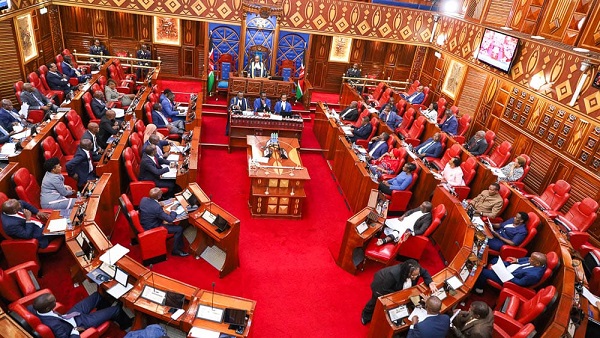
NAIROBI, October 26, 2026. Kenya’s first attempt to write a dedicated artificial intelligence law has stalled in the Senate. The chamber’s Standing Committee on Information, Communication and Technology has recommended that the House not proceed with the Artificial Intelligence Bill, 2026, arguing that the country should settle on a national policy before it starts legislating.
The Bill was sponsored by nominated Senator Karen Nyamu and was introduced in the Senate in April. The committee, chaired by Trans Nzoia Senator Allan Chesang, delivered its verdict in a report that reporters at The Star described as damning. Its central warning was that the proposal could regulate AI “too broadly, too early and too punitively” for Kenya’s current stage of development.
What the Bill proposed
The legislation set out to build a full legal framework for how AI is developed, deployed and used in Kenya. At its centre was a new Office of the Artificial Intelligence Commissioner, with powers to register AI systems, carry out audits, investigate complaints and enforce compliance.
The Bill also proposed an AI Authority to set industry standards and run testing sandboxes for startups, along with an Advisory Committee to counsel government on emerging risks and trends.
The penalties drew the most attention. Serious offences would have carried fines of up to KES 5 million, or a percentage of annual turnover, with prison terms of up to two years, or both. Offences included the creation of harmful deepfakes. Analysts who reviewed the text before the committee reported also noted a requirement that AI generated content resembling real people, places or events be clearly labelled.
Why the committee said no
The panel reached its position after hearing from 143 stakeholders, among them government agencies, multinational technology companies, professional associations, civil society groups and individual citizens.
Its objections fell into several areas.
Penalties. The committee said fines and possible criminal charges were out of proportion to the work of many local developers, whose projects are often experimental, noncommercial and aimed at widening access to technology rather than causing harm. It warned that such rules could push innovators, and their intellectual property, to countries with lighter oversight.
A concentration of power. Stakeholders raised concern that the Commissioner’s office would become what they called a super regulator, combining administrative, supervisory, enforcement and quasi judicial functions. The committee said this could clash with existing bodies, including the Office of the Data Protection Commissioner and the Communications Authority of Kenya.
Cost. Lawmakers also questioned the price of creating new institutions at a time when the country is under pressure to contain public spending.
Gaps in the draft. The committee faulted the Bill for not adequately dealing with cross border AI systems, general purpose AI models and fast moving technological risks. It noted that Kenya mostly uses AI systems built by foreign companies, which would make a centralised domestic regime hard to enforce.
Industry voices were among those who shaped the debate. Microsoft Kenya proposed folding AI oversight into existing institutions rather than building a standalone office. Google and Safaricom raised concerns about the Bill’s definitions and the obligations it would impose.
Policy before law
Having set the Bill aside, the committee pointed to the executive branch. It recommended that government first finalise a comprehensive national policy to guide any future legislation. The Ministry of ICT told the panel that the National Artificial Intelligence and Emerging Technologies Policy, 2026, is in its final stages.
The sequencing was already a point of tension. Commentators had observed that the Bill landed in the Senate while the ICT ministry and the civil society group KICTAnet were running consultations on that same policy, and that it also arrived after the national AI strategy launched last year. In their view, the Bill risked getting ahead of the policy it should have been built on.
The recommendation now goes to the Senate as a whole, which must decide whether to adopt it.
A verdict on design, not on need
Technology commentators have been quick to stress that the committee rejected this particular draft rather than the idea of regulation. Reporting by Techweez noted that the Bill had correctly pointed to weaknesses in existing law, including the Science, Technology and Innovation Act and the Data Protection Act, which do not fully capture how AI systems work in practice.
The practical result is that Kenya currently has no dedicated AI law. The Data Protection Act, 2019 offers limited coverage of automated decision making, but it does not address safety, accountability or deepfake regulation.
Kenya’s AI sector, as local reporting describes it, is made up largely of small startups using open source tools in agriculture, health, lending and education, working on thin margins. That profile was at the heart of the committee’s concern about compliance costs.
The clock is ticking
The timing adds weight to the debate. Kenya heads into a general election in 2027, and a new continental council has been announced to examine the impact of AI on democracy in Africa ahead of that vote. Synthetic media in politics is precisely the type of harm the Bill’s deepfake provisions were meant to address, and whether the forthcoming policy will fill that space is not yet clear.
Kenya is not the only country working through this trade off. In South Africa, Communications Minister Solly Malatsi has said Cabinet should finalise a replacement AI policy by the end of March 2027, after an earlier draft was withdrawn in April.
For now, the message from the Senate is that Kenya should write its rulebook in order: strategy, then policy, then law. Whether the policy arrives quickly enough, and firmly enough, to cover the gap is the question that will follow Kenya’s AI sector into an election year.
Sources: The Star (October 15, 2026), Techweez (October 16, 2026), Innovation Village AI Africa Intelligence (October 21, 2026), Tech Policy Press, Citizen Digital, iAfrica.com.