The South African startup says its 1.5 billion parameter model beats much larger rivals at predicting African text and costs less to run. The results are the company’s own, and independent testing has yet to arrive.
JOHANNESBURG, October 26, 2026. A South African startup has released an artificial intelligence model that it says was designed around African languages from the first day of training, rather than adapted from a system built for English. Vambo AI’s MORENA, a 1.5 billion parameter language model, covers 12 African languages plus English and French, and its weights are open for anyone to download and build on.
The company’s co-founder, Isheanesu Misi, describes it as the largest open African AI model trained from scratch. The claim matters because most African language projects start from an existing foreign model and adjust it. MORENA’s makers chose the harder route, fixing the vocabulary, the language list and the data mix before training began.
What was released
MORENA is a family of models, not a single checkpoint. According to the company’s Hugging Face pages, it includes a 1.5 billion parameter base model meant as a starting point for fine tuning, a 1.5 billion parameter instruction tuned version built for chat, translation and tool calling, and a smaller 0.5 billion parameter version packaged for laptops. The smaller file is about a third of a gigabyte and can be run through common local tools such as Ollama.
The model covers ChiShona, Kiswahili, Hausa, Yoruba, Igbo, isiZulu, isiXhosa, Kinyarwanda, Setswana, Afrikaans, isiNdebele and Nigerian Pidgin, alongside English, French and code. Vambo says it trained on roughly 251.7 billion tokens, followed by another 63 billion in a mid training stage, according to TechRadar’s account of the release.
The technical report carries a September 18 release date, and wider coverage followed in early October. The name itself comes from Sesotho and Setswana, where it means a king, a lord or a chief.
The licence and what is withheld
Early coverage of MORENA noted that the company had not made its licence terms public. The model pages now state that the weights are released under the Apache 2.0 licence, which permits commercial use, fine tuning and redistribution of derivative models. For startups and researchers deciding whether to build on the model, that is the most important detail, and it is a permissive one.
What is not open is the training data. The model card says the training corpus is not released with the weights, which limits how fully outsiders can audit what the model learned from.
The cost argument
Vambo’s strongest pitch is economic. Models built mainly on English tend to chop African languages into far more tokens than necessary, and every extra token raises the price of each query and each training run. MORENA uses a vocabulary of 65,536 entries designed around its target languages. The company says African text needs 1.39 times fewer tokens than under Google’s Gemma 3 vocabulary and 1.53 times fewer than under Meta’s Llama 3.2.
Misi has argued that the efficiency makes the model cheaper to run in African contexts and cheaper to adapt, meaning startups in Nigeria or researchers in Kenya can spend less to build and deploy their own systems.
The training bill is also modest by frontier standards. The model card puts the final release at about 12,834 A100 GPU hours, an estimated 25,000 to 40,000 dollars at typical cloud prices, though the wider research programme behind it used about 22,450 GPU hours. The work was done on the CINECA Leonardo supercomputer in Italy with support from the AI Hub for Sustainable Development. That detail tempers the idea that anyone can repeat the feat cheaply: it still needed institutional compute.
The benchmark claims
Vambo’s headline result is a score of 1.408 bits per byte on held out African text, the lowest of 26 models the company measured. That figure measures how well a model predicts text, and lower is better. The comparison point in coverage is Lugha Llama 8B, an Africa adapted model with about five times the parameters, which scored 1.423. Vambo says MORENA beat it in eight of the 12 languages.
Misi has also said MORENA outperforms a Google model eight times its size. Coverage has not named the model, but the arithmetic and the company’s published tables point to Gemma 3 12B, which scored 2.159 on the same measure. That identification is an inference, not something the company has stated.
On translation, the base model scored 43.2 on a standard chrF++ test when translating from English into five African languages, ahead of MADLAD 400 3B at 37.8 and Lugha Llama 8B at 36.8. The picture reverses in the other direction. Analysis published by Remio notes that on translation from African languages into English, MORENA’s instruction model scored 48.7, behind MADLAD at 53.6 and Lugha Llama at 52.4.
Reasons for caution
Every figure above comes from the developer. The same Remio analysis stresses that native speakers have not independently rated the released model’s answers, and that a good bits per byte score shows text prediction, not factual accuracy, cultural sensitivity or usefulness in conversation. It also warns against reading the results as a blanket win over Google, Meta or Alibaba, since they cover specific benchmarks, model versions and languages.
Because the weights are public, those claims can be tested. Researchers and developers working in these languages can run their own evaluations, and the answers will matter more than any launch announcement.
The company and what comes next
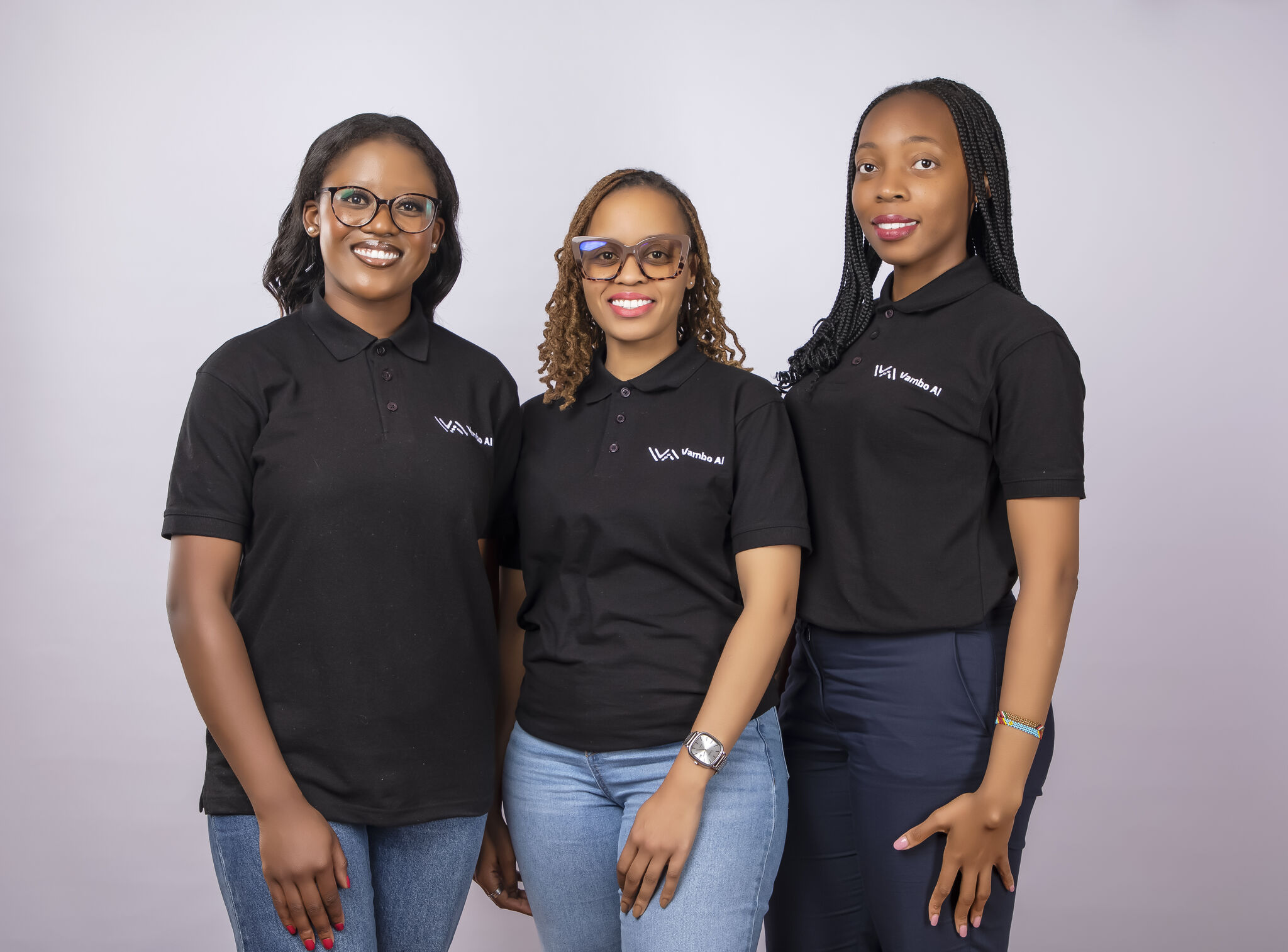
Vambo AI was founded in April 2023 by Chido Dzinotyiwei and Isheanesu Misi. Its platform lets individuals write, search, translate and transcribe, and gives businesses and developers an API. The company recommends that outside developers fine tune MORENA for their own purposes rather than deploy the base model as is.
The release lands as institutions urge African governments to favour practical, low cost AI. The World Bank’s chief economist for Africa, Andrew Dabalen, told reporters earlier this month that the continent can still benefit from simple applications on affordable devices. A small model that runs on a laptop and speaks Setswana or Kinyarwanda fits that description, if it holds up under scrutiny.
Sources: Hugging Face model cards for MORENA (vamboai), iAfrica.com (October 10, 2026), CIO Africa, TechRadar, allAfrica, Remio analysis, Reuters via CNBC Africa (October 6, 2026).