China’s proposed BRICS open-source AI community and South Korea’s K-AI Package arrived within days of each other. They offer African governments very different things, and each comes with strings.
ABUJA – In the space of one week in September, two of Asia’s biggest economies put artificial intelligence at the centre of their pitch to the developing world, and African capitals were among the intended audiences.
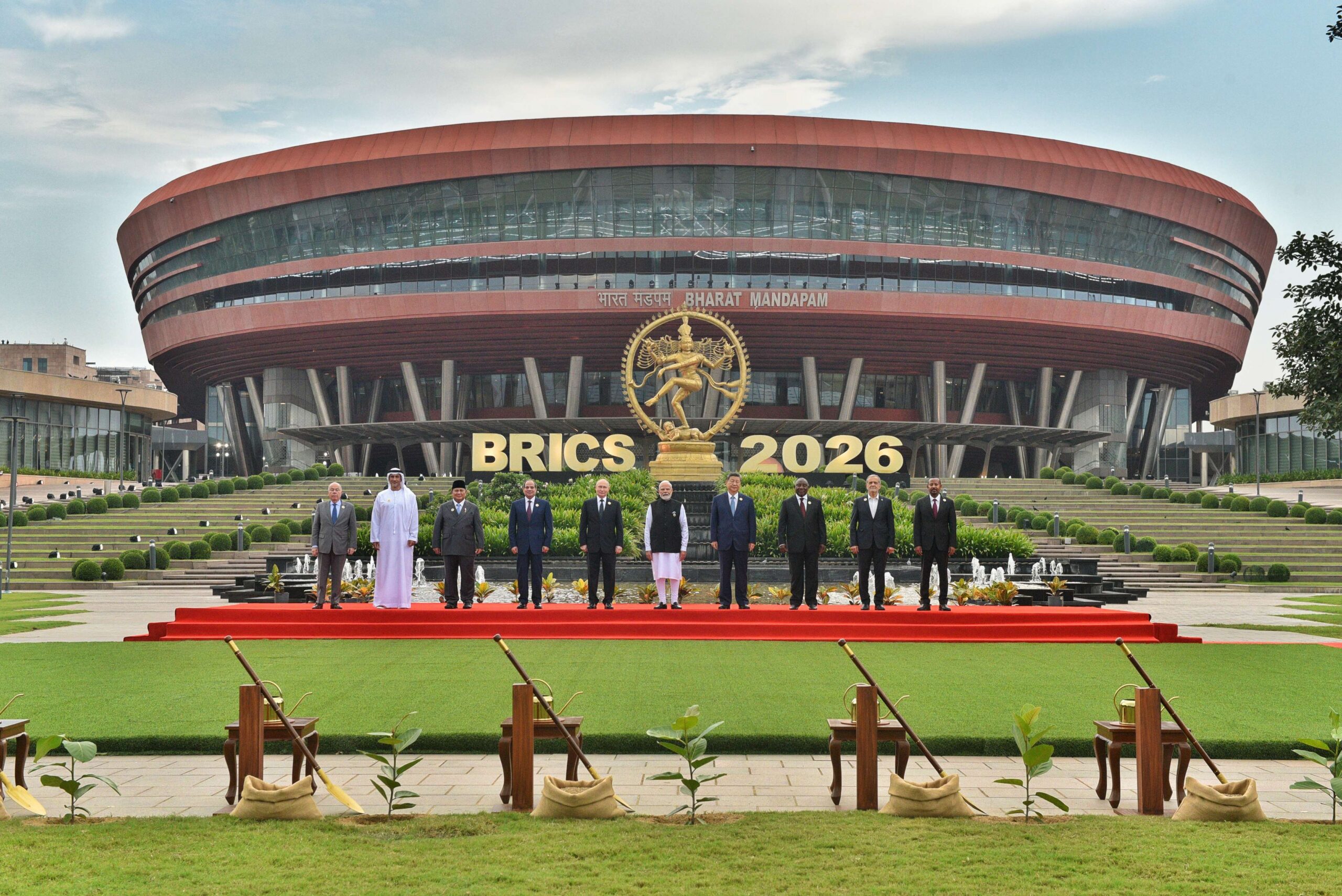
On September 13, at the 18th BRICS Summit in New Delhi, Chinese President Xi Jinping proposed that China lead a BRICS open-source AI community focused on building and applying large language models. A few days earlier, in Seoul, South Korea had used the eighth Korea-Africa Economic Cooperation (KOAFEC) ministerial conference to unveil the “K-AI Package”, a financing-led programme for AI infrastructure across the continent.
Neither announcement is a finished programme. Together, though, they show where the competition for influence over Africa’s AI development is heading: open models and training from Beijing, and financed data centres and power plants from Seoul.
Beijing: open-source models and a seat at the table
Xi’s proposal was one of five technology initiatives he put to BRICS leaders, covering AI, digital infrastructure, intelligent manufacturing, talent, and trade and investment. On AI, China’s Foreign Ministry said Beijing would pioneer a BRICS AI open-source community, support cooperation on developing and applying large language models, run specialised seminars and training courses, and build an open ecosystem for AI.
The pitch rests on a real strength. Chinese-developed open models such as DeepSeek and Qwen rank among the most capable openly available systems in the world, and their code can be accessed and adapted by users, in contrast to the more closed approach of several leading US developers. Xi also invited BRICS members to join the World AI Cooperation Organization, a group of nearly 30 countries established by Beijing, and called for a consensus-based global AI governance framework.
For African governments, the appeal is easy to see. Open models can lower the cost of building local-language tools and public-service applications, and training programmes address a skills gap that African leaders raise at almost every forum. South Africa, Egypt and Ethiopia are among the bloc’s African members.
But the proposal’s reception in New Delhi was cooler than its billing. According to Bloomberg’s reporting, the BRICS joint declaration did not explicitly endorse it. The text instead called for international cooperation on access to AI resources, alongside safety, security, inclusiveness and reliability. Indian Prime Minister Narendra Modi used the same summit to warn that technology and critical minerals were being turned into instruments of pressure, a reminder that the bloc is far from united on technology policy.
Analysts also point to a structural limit. Open-source software does not remove dependence on chips, power and cloud capacity, much of which sits in supply chains that China and the United States each influence. One Indian analyst interviewed after the summit read the initiative as part of an effort to build a parallel AI ecosystem aimed at the Global South rather than at BRICS’ founding members.
Seoul: AI as development finance
The K-AI Package is a different kind of offer. Presented at KOAFEC, which opened in Seoul on September 8 and drew ministerial delegations from 45 African countries, it bundles AI data centres, energy infrastructure, digital connectivity and AI applications in agriculture, healthcare, energy and transport. South Korea’s finance ministry said Korea would help countries develop AI in line with their own priorities, organised around three pillars: AI infrastructure, AI solutions in productive sectors, and digital skills.
Concrete commitments came quickly:
- Tanzania. An AI education institution was named the first K-AI Package project. Seoul Economic Daily reported that it will be backed by a $170 million loan from Korea’s Economic Development Cooperation Fund (EDCF).
- Korea-Africa AI Hub. Korea and the African Development Bank Group signed a letter of intent to establish the hub, with cooperation centred on AI in agriculture, health and energy. An action plan adopted at the conference sets priorities for 2027–2028.
- Startup access. K-AI Cloud Vouchers are intended to give African startups access to GPU- and NPU-based cloud infrastructure.
- Business links. Around 90 Korean companies took part in a business forum alongside the ministerial meetings, with several expressing interest in establishing a presence in Africa.
African Development Bank President Sidi Ould Tah told the conference that AI could add as much as $1 trillion to Africa’s GDP by 2035, provided adequate investment is made.
The financing model is also where the questions begin. The K-AI Package is built on EDCF loans, and Seoul Economic Daily reported that only Korean companies can win the contracts and that projects will draw on Korean AI technology, which it described as a springboard for Korean AI firms entering Africa. Recipient countries choose from a menu of components, but they would be taking on debt for infrastructure supplied by Korean vendors.
What the two offers mean for Africa
Read side by side, the announcements reflect different strategies. China is offering software, standards and training through a multilateral club, and the infrastructure to run it is left largely to the recipient. Korea is offering the physical layer, the data centres and the power, along with applications, on concessional loan terms and with Korean suppliers attached.
Both arrive as the continent’s own priorities take shape. The African Union has a Continental AI Strategy, African nations launched an “AI for Africa” initiative at last year’s G20, and the UN-backed scientist Girmaw Abebe Tadesse, who leads Microsoft’s AI for Good Lab in Kenya, said last week that Africa should start from the problems it needs to solve rather than adopt technology built for other places.
Several questions will decide whether these offers matter:
- Follow-through. Xi’s proposal lacks a joint BRICS endorsement, a funding figure or a timetable. The K-AI Package has a first project and a first loan, but a pipeline of projects is still to be identified.
- Data and sovereignty. Open models can be run locally, but who hosts the data centres, who sets the terms for training data and who controls updates are issues the announcements do not settle.
- Debt and tied procurement. African finance ministries will weigh loan-financed, vendor-restricted infrastructure against other options, including private investment already flowing into the continent’s data centres.
- Non-alignment. Analysts note that countries wanting AI capability without dependence on either Beijing or Washington may find that no single bloc’s offer gets them there.
The coming months should show how much substance sits behind each announcement. Xi’s next stop after New Delhi was Washington, where AI is expected to feature in talks with US President Donald Trump, and Africa’s own policy calendar includes FIFAfrica26 and the run-up to WSIS+20.
For now, African governments have two new offers on the table, and no obligation to pick between them.
Sources and verification notes
- Chinese Foreign Ministry statement, via CNBC, TechRepublic, Tribune (Pakistan) and Eastern Herald, on Xi’s September 13 proposal.
- Bloomberg and SCMP reporting, as relayed by TechRepublic, on the BRICS joint declaration and Modi’s remarks.
- Korea Times, Yonhap/KPL, allAfrica, Seoul Economic Daily, and AfDB-related reporting on KOAFEC and the K-AI Package.
- UN News interview with Girmaw Abebe Tadesse, September 25, 2026.
Editor’s checks before publication:
- Coverage differs on the exact day Xi spoke (September 12 vs 13) and on the KOAFEC opening day (Tuesday vs Wednesday). Confirm against the Chinese MFA and Korean finance ministry releases.
- The claim that China is offering DeepSeek or Qwen-based tools to BRICS members at no cost appears in only one secondary outlet and is not included above. Confirm before adding it.
- No African government or AU reaction to either announcement turned up in the sources reviewed. A comment from South Africa’s, Egypt’s or Ethiopia’s foreign ministry, from Tanzania’s government on the EDCF loan, or from the AfDB would strengthen the piece.
- Verify the $170 million EDCF figure against a Korean government source, as it comes from a single outlet.