Africa’s biggest internet freedom forum has just closed. Its organisers say the conversations will feed into global digital governance, with a UN dialogue on AI due in May 2027. The test is whether African positions reach the room.
ABUJA – Hundreds of digital rights advocates, regulators, platform representatives and researchers spent the last week in a resort on Mauritius’s west coast arguing over a question that African governments have so far answered unevenly: who should write the rules for artificial intelligence on the continent?
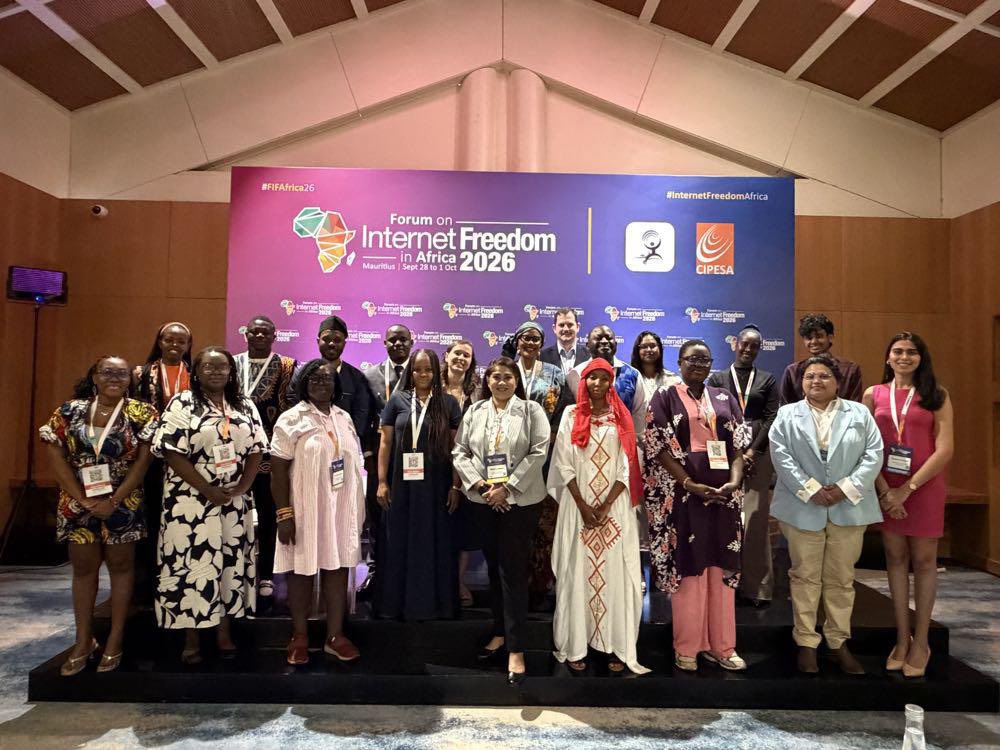
The 13th Forum on Internet Freedom in Africa (FIFAfrica26) ran from September 28 to October 1 at the InterContinental Resort in Balaclava. Its organisers, the Kampala-based Collaboration on International ICT Policy for East and Southern Africa (CIPESA), say the forum is meant to gather insights that will shape Africa’s voice in global digital governance processes, including the WSIS+20 review. Commentators have linked it as well to the second UN Global Dialogue on AI Governance, scheduled for New York on May 3-4, 2027.
At the time of writing, no outcome document or formal declaration from the forum had been published. What follows is what the forum set out to do, why the timing matters, and what will determine whether it counts.
A forum with a long record, in a new setting
CIPESA launched FIFAfrica in 2014, and it describes the event as Africa’s premier multi-stakeholder gathering on digital rights, digital democracy and internet governance. Earlier editions were held in Uganda, South Africa, Ghana, Ethiopia, Zambia, Tanzania, Senegal and Namibia.
This year’s host was chosen deliberately. CIPESA called Mauritius Africa’s most stable democracy, with strong rule of law and protection for freedom of expression online and offline. The island has also been recognised by the Oxford Insights Government AI Readiness Index 2024 as a continental front-runner in AI adoption, according to the Association for Progressive Communications (APC), and has set up a National AI Unit. The forum was hosted with the Mauritius-based Halley Movement Coalition and opened by Dr. Avinash Ramtohul, the country’s Minister of Information Technology, Communication and Innovation.
More than 500 participants were expected. The agenda was built from more than 450 session proposals and covered digital democracy, data governance and sovereignty, AI and emerging technologies, platform accountability, digital inclusion, digital trade, and digital security. The 2026 State of Internet Freedom in Africa report was also due to be launched.
What was on the AI agenda
The AI sessions reflected the tension in African policymaking between building capacity and protecting rights. Among the sessions listed by APC were “Building Meaningful AI Governance Frameworks that Serve Local Realities” and “AI Surveillance, Power, and Digital Freedoms in Africa.” CIPESA’s agenda notes pointed to practical workshops as well, including a Masakhane session on AI and African languages, and one on safety by design for African tech ecosystems run by IREX.
Inclusion was a recurring theme in CIPESA’s pre-forum material. Mercy Ndegwa, Meta’s Director of Public Policy for Africa, argued in a CIPESA-reported discussion that AI systems can only reflect communities whose data and voices are included in their design and training, and CIPESA noted that African-language datasets remain severely underdeveloped and costly to build at scale.
The gap the forum was trying to address
CIPESA’s own analysis frames the underlying problem. In a July assessment of AI governance on the continent, it noted that Benin, Côte d’Ivoire, Ethiopia, Mauritius, Nigeria, Tunisia, Zambia and Zimbabwe, among others, have developed AI policies or strategies. But it found that apart from Kenya, most countries with strategies do not set out budgets for implementing them. Rwanda uses project-level funding, while Egypt and Mauritius rely on programme budgets. Elsewhere, CIPESA has stated that no African country has yet passed definitive AI legislation, although the African Union’s Continental AI Strategy offers guiding principles.
That backdrop explains the emphasis on sovereignty and agency in the forum’s build-up. A CIPESA commentary published in September argued that Africa needs sovereignty and agency in global AI governance that goes beyond a safety-only frame. A newsletter published as the forum opened made a similar point about the week’s other AI announcements, warning that open source is not the same as sovereignty and that access is not the same as ownership. The newsletter’s argument is an opinion, but it reflects a view heard widely among African policy advocates.
Where the forum fits in the global calendar
The global process has real structure. The UN General Assembly created the Global Dialogue on AI Governance in resolution 79/325, alongside an Independent International Scientific Panel on AI. The first Dialogue took place in Geneva on July 6-7, 2026, back-to-back with the ITU’s AI for Good Global Summit and the WSIS Forum. The second is set for New York on May 3-4, 2027, alongside the Multistakeholder Forum on Science, Technology and Innovation for the Global Goals.
The co-chairs’ summary of the Geneva session says the inaugural dialogue set the direction and benchmarks for the New York meeting. It also links the process to the General Assembly’s WSIS+20 review, the ten-year-plus review of the World Summit on the Information Society, and warns that increasingly agentic AI poses profound challenges for the rule of law. The UN says travel support for the 2027 session is being raised on a rolling basis through the Digital Cooperation Fund, which matters for African civil society groups that struggle to fund attendance.
What will decide whether the forum matters
The link between a civil society forum in Mauritius and a UN session in New York is not automatic. Several things will determine whether Africa’s voice is heard:
- A written position. The forum has not yet produced a published set of recommendations. A clear outcome statement, ideally adopted before the UN’s 2027 consultation windows, would give African delegations something concrete to carry.
- Government uptake. FIFAfrica convenes regulators and officials, but it is not a negotiating body. The position that African states take in New York will be set by foreign ministries and the African Union, not by the forum.
- Funding. Strategies without budgets, as CIPESA found, are hard to turn into policy, and travel support for the 2027 dialogue is still being raised.
- Coordination with other tracks. The forum’s themes overlap with the continent’s AI strategy, the Global South’s growing interest in open models and financed infrastructure, and the data-governance debates already under way in regional bodies.
The forum’s strongest asset is its convening power. Its biggest limit is that it advises rather than decides.
What to watch next
Readers should look for the forum’s outcome statement and the 2026 State of Internet Freedom in Africa report, the African Union’s position ahead of the May 2027 dialogue in New York, and whether national delegations from Africa announce funding for AI strategies. Africa Tech Festival, set for November 16–19 in Cape Town, will give the next big stage to these arguments, including a panel asking how Africa can become an AI producer rather than just a consumer.
Sources and verification notes
- CIPESA and FIFAfrica announcements (March, April, August and September 2026), including the agenda article of September 27.
- APC event and programme pages for FIFAfrica26.
- CIPESA commentary on AI governance and regulation in Africa (July 2026).
- United Nations Global Dialogue on AI Governance FAQ, key dates, and co-chairs’ summary of the Geneva session.
- Africa in the Room newsletter, “The World’s Biggest AI Governance Week Just Happened” (opinion).
Editor’s checks before publication:
- The forum closed on October 1, and I found no outcome document, closing statement or post-event reporting. Add direct reporting or quotes from attendees if you have them, and update the verbs if the organisers have published a declaration.
- The idea that FIFAfrica26 will shape the May 2027 New York dialogue comes from a newsletter. CIPESA and APC name WSIS+20 explicitly, but I did not find an organiser statement tying the forum to the New York dialogue. The article attributes it accordingly. Confirm with CIPESA.
- The Mercy Ndegwa remarks come from a CIPESA write-up of a prior discussion, not necessarily a FIFAfrica26 session. Check the context before running as a forum quote.
- Verify the “no definitive AI legislation” statement with a current source, as laws may have changed.
- WSIS+20 context is summarised from the UN co-chairs’ summary. Add the review’s outcome and timeline from an official source if you want more detail.