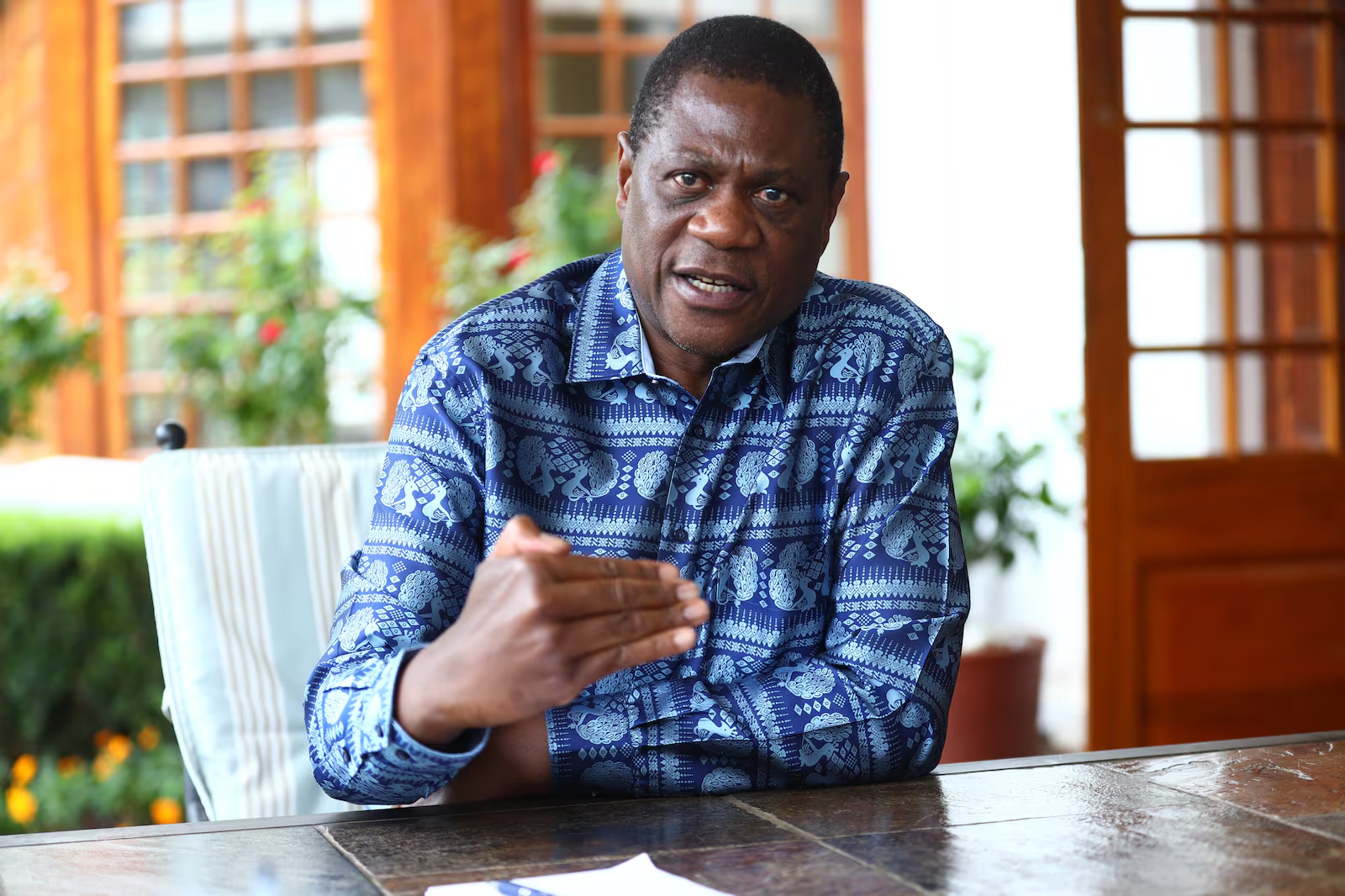
South African Deputy President Paul Mashatile has positioned artificial intelligence as a powerful enabler of a unified continental digital market, arguing that AI can deliver seamless and secure cross-border payments while deepening trade and prosperity under the African Continental Free Trade Area (AfCFTA).
Delivering the virtual opening address at the 29th Africa Tech Festival in Cape Town on Monday, Mashatile stressed that no African country can realise its digital potential in isolation. “Our greatest advantage, therefore, lies not in the size of individual markets, but in the strength of a connected continent,” he said. “For us, the African Continental Free Trade Area presents a unique opportunity to create a single digital market that drives innovation, investment, and inclusive growth.”
The three-day festival, held at the Cape Town International Convention Centre, brings together thousands of technology leaders, policymakers, investors and innovators. Mashatile spoke remotely from Pretoria, coinciding with President Cyril Ramaphosa’s high-level working visit to Silicon Valley. The South African delegation there includes government officials, academics, business representatives, technical experts and university students focused on understanding the global AI ecosystem and shaping the country’s approach for continental benefit.
Mashatile called on African leaders to develop frameworks ensuring AI serves people, protects rights, and reflects African values, languages and development priorities. Technology, he said, must also adapt to Africa rather than the other way around. Without such safeguards and coordination, the continent risks a “two-speed” digital future in which some regions innovate and prosper while others remain excluded.
He highlighted persistent challenges that must be addressed: millions of Africans still lack affordable and reliable broadband; digital skills shortages constrain growth; infrastructure gaps remain pronounced between urban and rural areas; connectivity costs stay high for many households; and cybersecurity threats continue to escalate in scale and complexity. Capturing the full value of AI and digital transformation, Mashatile noted, will require connectivity, infrastructure, skills, investment and trust beyond mere ambition.
South Africa, he pointed out, already hosts a significant share of the continent’s data-centre capacity and remains Africa’s largest cloud market. Cloud adoption alone is projected to unlock more than R185 billion (approximately US$11 billion) in economic value for the country by 2028, with small and medium-sized enterprises among the primary beneficiaries.
Mashatile framed the moment as a generational opportunity. Africa, the world’s youngest continent, has a chance not merely to catch up but to leap forward by becoming a builder and exporter of AI solutions rather than only a consumer of technologies trained on data that does not reflect African realities. “Africa will not compete in the age of artificial intelligence through imitation. We will compete by solving our own challenges, harnessing our own talent, building our own capabilities and creating solutions that the world will want to use,” he said in related remarks.
The address outlined broader digital priorities spanning infrastructure investment, skills development (particularly in AI, cybersecurity, data science and entrepreneurship), African innovation and commercialisation, digital trust and accountability, and deeper regional integration through trusted data flows, interoperable payment systems and harmonised regulations under the AfCFTA.
The Africa Tech Festival, the continent’s longest-running technology gathering (formerly known as AfricaCom), continues through 19 November with sessions focused on telecoms and connectivity, data centres, artificial intelligence, cybersecurity, startups and digital transformation. Speakers include executives from OpenAI, Amazon, Meta, MTN, Vodacom, Orange, Cassava Technologies and other major players.
Mashatile’s intervention underscores a growing continental consensus that AI, if guided by African priorities and underpinned by integration, can accelerate the AfCFTA’s promise of a more connected, competitive and inclusive single market.