
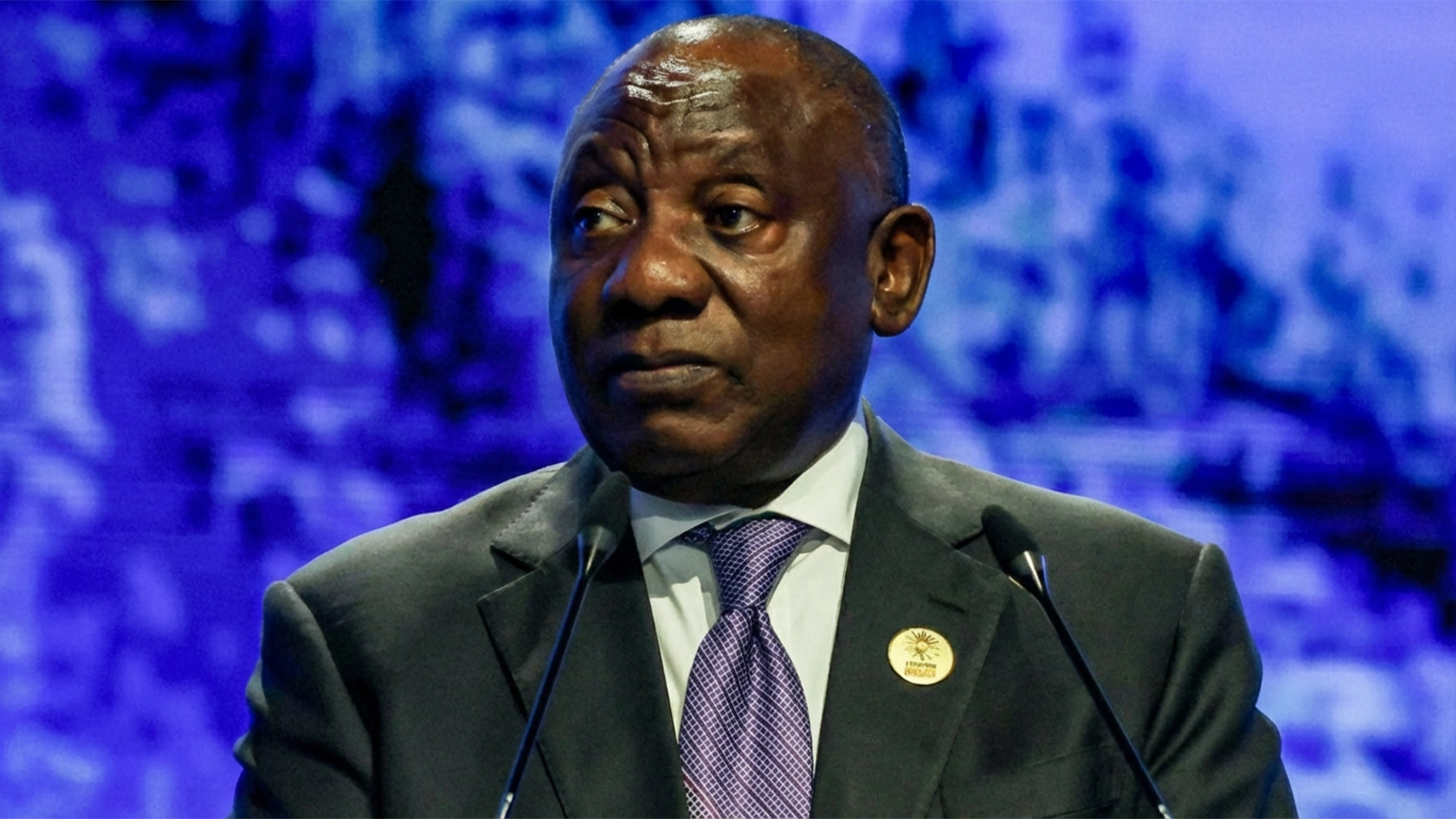
South Africa is seeking to move beyond being a consumer of artificial intelligence to becoming a producer of homegrown AI technologies, as President Cyril Ramaphosa leads a high-level delegation to Silicon Valley to attract investment, strengthen research capacity and position the country as a major player in the global AI economy.
President Cyril Ramaphosa is leading a high-level South African delegation on a working visit to Silicon Valley, California, from 15 to 21 November 2026, as the country intensifies efforts to establish itself as an active participant in the global artificial intelligence (AI) industry.
The visit brings together government officials, university researchers, AI postgraduate students, technology entrepreneurs, startup founders, investors and representatives of research institutions to explore opportunities for collaboration with some of the world’s leading technology companies and academic institutions.
The delegation, which includes approximately 27 university AI postgraduate students and 24 startups, reflects South Africa’s ambition to build an AI ecosystem driven by local talent, research, entrepreneurship and investment.
According to the South African government, the mission is designed to strengthen the country’s understanding of the global AI ecosystem and inform its approach to developing, adopting and applying AI across government, business and society.
Rather than remaining a market for technologies developed elsewhere, South Africa wants to position itself as a country capable of developing AI solutions, attracting technology investment, creating employment opportunities and contributing to the next generation of global innovation.
Silicon Valley engagement targets investment and innovation
The programme features engagements with leading technology companies, venture capital investors, researchers, academics and AI specialists across Silicon Valley.
One of the major engagements is the Semafor: Silicon Valley and the World gathering on 16 November, bringing together industry leaders and experts to examine emerging technologies and the changing global AI landscape.
The delegation is also scheduled to visit Stanford University, where discussions with AI researchers, faculty members and venture capital investors will examine how academic research can be translated into commercially viable technologies.
Other engagements include visits to Alphabet and Google, Cisco, Palo Alto Networks and Microsoft’s Experiential Centre.
The discussions cover several strategic areas, including frontier AI, robotics, cloud computing, cybersecurity, digital infrastructure, AI applications in government and industry, and the future of work.
A central feature of the mission is the South Africa AI Opportunity gathering, organised around the theme Building the African AI Economy: Infrastructure, Investment and Innovation.
The gathering is expected to connect South African and international stakeholders around investment opportunities in data centres, computing infrastructure, energy, digital networks and AI startups.
The government also hopes to use the engagements to attract investors and technology partners interested in establishing or expanding operations in South Africa.
South Africa builds on its data centre advantage
South Africa’s existing digital infrastructure is one of the strongest foundations for its AI ambitions.
The country already hosts the majority of Africa’s data centre capacity, giving it an advantage in the infrastructure needed to support cloud computing, AI development and large-scale data processing.
President Ramaphosa highlighted this advantage in his 16 November address, noting that South Africa has established hosting and network infrastructure, world-class universities, a sophisticated financial sector and significant renewable energy resources.
The country is seeking to build on these strengths by attracting additional investment into data centres, fibre-optic networks, cloud infrastructure and advanced computing facilities.
However, infrastructure expansion alone will not guarantee a competitive AI industry. Access to high-performance computing, reliable electricity, skilled professionals and funding for local innovators will be equally important.
South Africa’s engagement with Silicon Valley is therefore also an opportunity to understand how successful technology ecosystems connect research institutions, entrepreneurs, investors and infrastructure providers.
Universities and startups take centre stage
The inclusion of postgraduate students and startup founders is particularly significant to the country’s long-term AI strategy.
By exposing emerging researchers to leading academic institutions and technology companies, the government hopes to strengthen research collaboration, develop advanced technical skills and encourage the commercialisation of locally developed innovations.
For startups, the visit offers opportunities to connect with potential investors, accelerators, technology partners and international markets.
South Africa wants its emerging AI companies to develop solutions that address real economic and social challenges, rather than simply adapting technologies created in other parts of the world.
Potential applications include healthcare, agriculture, education, financial services, energy, logistics and public administration.
The government also intends to explore how AI can improve public service delivery, strengthen productivity and support the development of new industries.
Balancing AI growth with governance and digital sovereignty
Beyond investment and innovation, the visit comes as South Africa works to establish an appropriate regulatory environment for artificial intelligence.
In April 2026, the country unveiled a draft National AI Policy proposing new institutions, including a National AI Commission, an AI Ethics Board and an AI Regulatory Authority.
The proposed framework seeks to encourage innovation while addressing concerns around data protection, accountability, discrimination, cybersecurity and the broader social and economic consequences of AI adoption.
Digital sovereignty is another important consideration.
As countries increasingly depend on foreign technology providers for computing infrastructure, cloud services and advanced AI models, South Africa wants to ensure that its technological development does not compromise its control over sensitive data, national priorities and digital policy.
The government has also acknowledged the potential impact of automation on employment, particularly in sectors such as manufacturing, retail, agriculture and administrative services.
Its objective is to encourage AI-driven productivity and economic growth while ensuring that workers are not left behind in the transition.
A wider opportunity for Africa’s AI economy
South Africa’s ambitions extend beyond its domestic technology market.
With its existing digital infrastructure, research institutions, financial sector and growing startup ecosystem, the country hopes to position itself as a competitive AI hub capable of serving markets across the African continent.
The opportunity is significant as African countries increasingly explore AI applications in healthcare, agriculture, education, financial inclusion, public administration and local-language technologies.
However, the continent continues to face challenges involving limited computing capacity, infrastructure costs, funding gaps, electricity reliability and shortages of specialised AI talent.
South Africa’s efforts to attract investment and strengthen its innovation ecosystem could therefore have implications for the wider African technology industry.
The visit also comes amid intensifying global competition for AI infrastructure, investment and technical expertise, with governments increasingly recognising artificial intelligence as a strategic driver of economic competitiveness.
What happens after Silicon Valley?
While the engagements offer South Africa access to international expertise, technology partnerships and investment opportunities, the real measure of success will be what the country achieves after the delegation returns home.
The challenge will be translating meetings and knowledge exchanges into concrete investments, research partnerships, startup funding, skills development programmes and locally developed AI products.
South Africa has already established an important foundation through its data centre industry and higher education institutions. Its next challenge is to ensure that these advantages translate into a productive domestic AI industry.
For President Ramaphosa, the central objective is clear: South Africa must become a producer of AI innovation rather than remain a consumer of technologies developed elsewhere.
Whether the Silicon Valley mission delivers on that ambition will depend on the government’s ability to turn international partnerships into sustainable opportunities for local researchers, businesses and the wider economy.


