For years, African developers, researchers and startups have faced the same awkward reality. If they wanted serious computing power to train or run an AI model, they usually had to rent it from a data centre in Frankfurt, Virginia or Singapore. The data left the continent, the bills were paid in dollars, and the hardware stayed out of reach.
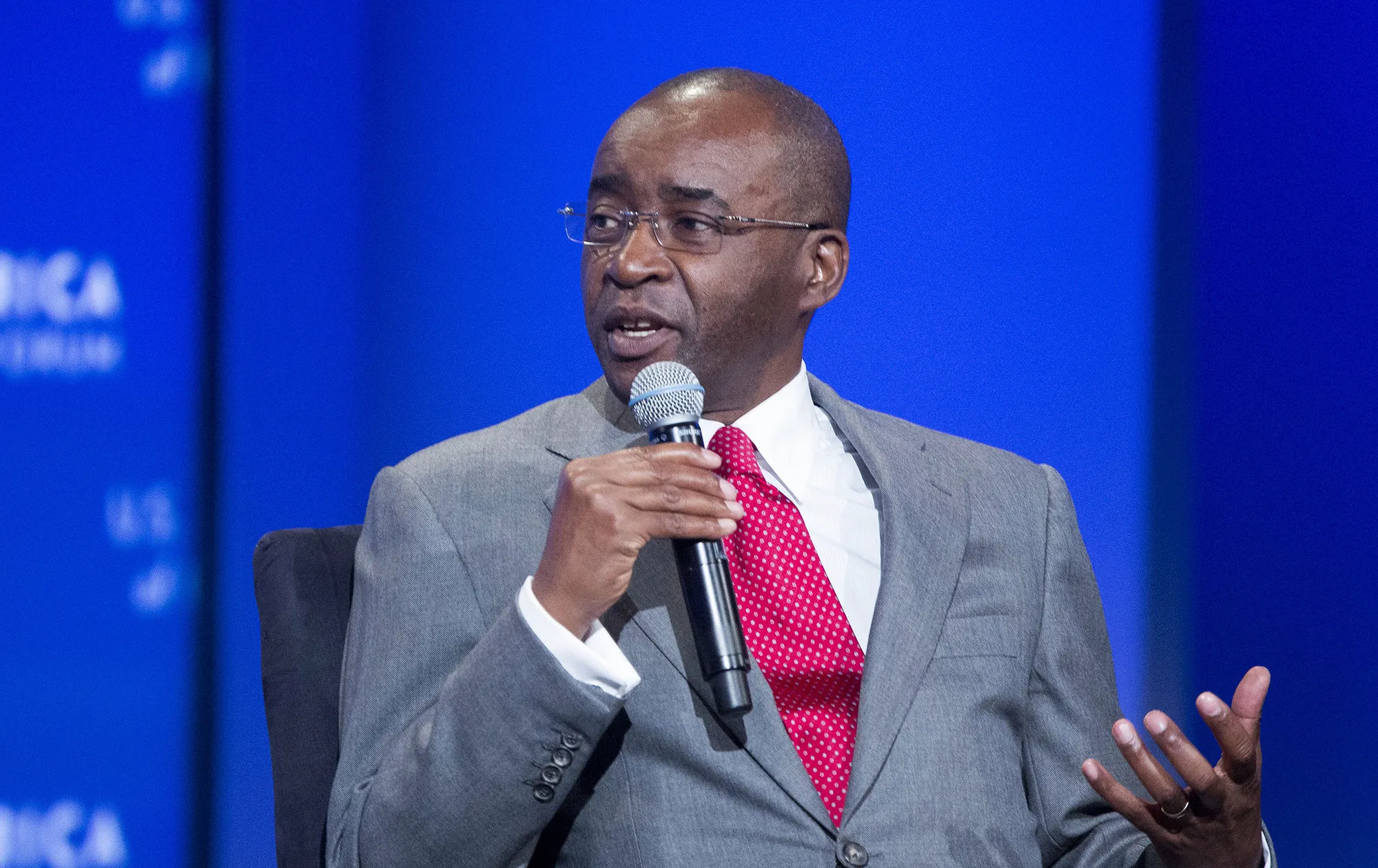
That picture is starting to change. A wave of so called AI factories is going up across Africa, and at the centre of it sits Cassava Technologies, the pan African company founded by Zimbabwean businessman Strive Masiyiwa, working with chipmaker NVIDIA.
A $720 million bet on the continent
Cassava has said it could invest up to $720 million to build what it describes as Africa’s first AI factory, using NVIDIA’s accelerated computing and AI software. The plan is to roll out roughly 12,000 GPUs across the continent over three to four years, with deployments in South Africa, Egypt, Kenya, Nigeria and Morocco.
South Africa came first. Cassava has taken delivery of 3,000 GPUs there, built on NVIDIA’s Hopper generation H100 and H200 chips, and housed in the data centres run by its Africa Data Centres arm.
Cassava executive Hardy Pemhiwa has been clear that the chips are only part of the story. “The GPUs themselves are like laying fiber,” he told Bloomberg, adding that the real investment lies in building the whole AI ecosystem around them. In practical terms, that means giving university researchers, startups, developers and government agencies a place to train and fine tune models, and to run them at scale, without leaving Africa to do it.
Each GPU can cost between $45,000 and $60,000, which helps explain why the price tag is so large, and why few African companies have attempted anything like it before.
Stratos Lab joins the race in South Africa
Cassava is no longer the only name in the conversation. In August, Johannesburg based Stratos Lab announced its own AI cloud at the Activate AI conference in Cape Town, working with Dubai based integrator Ecoblox and data centre operator Digital Parks Africa.
The first phase uses 400 of NVIDIA’s newer Blackwell Ultra B300 GPUs spread across 50 servers, hosted at Digital Parks Africa’s Samrand campus in Centurion. The partners say the system delivers 7.2 exaflops and call it the most powerful AI cloud on the continent. Stratos Lab will sell access through GPU as a service, managed platform services and bare metal computing.
That claim has not gone unchallenged. The 7.2 exaflops figure is measured at low precision. TechCentral reported that on a like for like basis, Cassava’s larger fleet of older chips still leads on raw compute, a point Stratos Lab’s own team has acknowledged, arguing that its hardware is a newer generation. Whoever wins the bragging rights, the competition itself is good news for African customers.
Morocco aims for scale
If South Africa is where the first machines have landed, Morocco is where the biggest numbers are being written. The Nexus AI Factory, unveiled in April at GITEX Africa in Marrakech, is planned for the Nouaceur area near Casablanca with an initial investment of $1.2 billion and a planned capacity of 500 megawatts.
The project is led by Nexus Core Systems with a consortium that includes NVIDIA, South Korea’s Naver Cloud and an international investment firm. TAQA Morocco is expected to supply renewable power. The first phase is expected to start at 40 megawatts using NVIDIA’s Blackwell GB200 chips, then grow in stages.
One detail is worth keeping straight. The $1.2 billion is the project’s initial budget, not a direct cheque from NVIDIA, which is supplying the technology. Morocco also reportedly won the project over competing African bids, with backers pointing to political stability, location and existing infrastructure.
Why it matters
The word that keeps appearing in all of these announcements is sovereignty. Governments and companies across Africa want to process sensitive data at home, cut the delay that comes from distant servers, and stop depending entirely on foreign clouds for the most important technology of the decade.
There are real questions still to answer. Announcements are not the same as running capacity, and plans spanning several countries often move slower than promised. Power supply, skilled engineers, affordable pricing for small startups and clear data rules will decide whether these factories serve the whole continent or only the biggest customers. Cassava’s expansion into Egypt, Kenya and Nigeria is also still ahead of it.
Still, the direction is hard to miss. In the space of two years, Africa has gone from having almost no purpose built AI computing to hosting several serious projects, backed by billions of dollars and some of the most advanced chips in the world. For a continent that has too often been left out of earlier technology cycles, building the engines at home may be the most meaningful shift yet.