As Nigeria prepares for the 2027 general elections, the electoral commission is turning to artificial intelligence to detect irregularities, strengthen cybersecurity and identify suspicious election records. But with public confidence in election technology still a critical issue, the real test will be whether AI can deliver greater transparency, accountability and trust.
Nigeria’s preparations for the 2027 general elections are entering a new technological phase, with the Independent National Electoral Commission (INEC) announcing plans to expand its use of artificial intelligence (AI) in election result verification and cybersecurity.
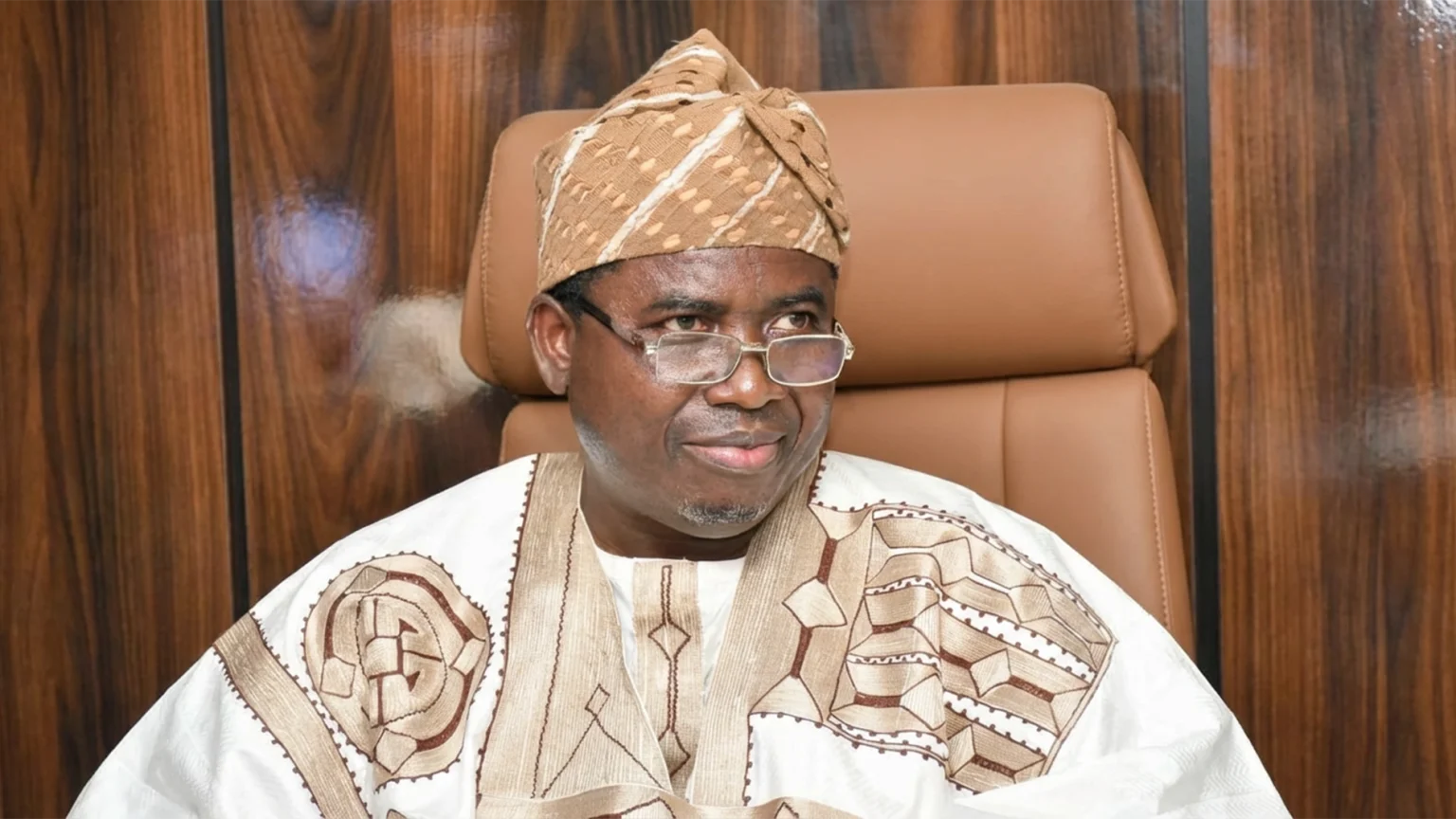
On October 6, 2026, INEC Chairman Professor Joash Amupitan announced that the commission had established a dedicated Artificial Intelligence Division within its Information and Communications Technology Department. He also disclosed that automated AI auditing tools had been integrated into the commission’s results verification process.
According to reports from TheCable and Punch, the proposed system will operate under a five-pillar AI governance framework, with mandatory human oversight. INEC is also finalising an AI governance policy to guide the technology’s use.
The announcement signals a potentially significant development in Nigeria’s electoral administration. However, it also raises questions about how the technology will work, what safeguards will govern its deployment and whether it can address the deeper challenges affecting electoral credibility.
For a country preparing for another nationwide election, the distinction between introducing new technology and building a trustworthy electoral system could prove decisive.
What Exactly Is INEC Planning to Do With AI?
INEC’s announcement points to three principal areas of application: election result verification, anomaly detection and cybersecurity.
First, AI-assisted auditing could help electoral officials identify inconsistencies across election records. Depending on how the system is designed, it could flag figures that do not correspond, detect unusual patterns in submitted records or identify discrepancies requiring further investigation.
Second, AI-powered anomaly detection could help monitor activity within electoral databases and identify behaviour that may indicate unauthorised access or suspicious changes.
Third, the commission’s broader approach addresses the growing threat of AI-generated disinformation, including fabricated videos, cloned voices and manipulated documents that appear to originate from election officials.
These applications could strengthen different parts of the electoral process. However, they should not be confused with a system that independently determines the winner of an election.
AI can help identify information that requires investigation. It cannot, by itself, establish that an election result is legitimate.
That distinction matters because an algorithm identifying a discrepancy does not necessarily mean that fraud has occurred. A difference between records could result from a data-entry mistake, a missing document, a transmission problem or deliberate manipulation.
Electoral officials must investigate the evidence before reaching a conclusion.
INEC’s stated commitment to human oversight is therefore important. The effectiveness of that commitment will depend on how the commission implements it, documents its decisions and allows independent scrutiny of its findings.
The Shadow of 2023: Why Trust Will Be the Biggest Test
To understand why this announcement matters, Nigeria’s experience with election technology in 2023 offers an important starting point.
Before the 2023 general elections, INEC promoted technological systems intended to improve voter accreditation and make polling-unit results more accessible to the public.
One of these was the INEC Result Viewing Portal, known as IReV, which allows the public to view images of polling-unit result sheets.
However, the portal experienced significant technical difficulties during the presidential election result-upload process.
INEC subsequently acknowledged the problems, attributing them to technical difficulties associated with scaling the platform from off-cycle elections to a nationwide presidential election. In its later review of the 2023 elections, the commission documented the challenges associated with uploading presidential results to IReV.
The episode demonstrated an important limitation of electoral technology: a system can be designed to improve transparency yet undermine public confidence when it fails to perform as expected.
AI does not automatically resolve this problem.
A sophisticated anomaly-detection system could identify inconsistencies in election records, but its usefulness would depend on the accuracy of the underlying data, the reliability of the infrastructure and the procedures followed when the system raises an alert.
If the technology is unreliable, poorly explained or inaccessible to independent scrutiny, it could introduce another layer of uncertainty into an already sensitive process.
For INEC, the challenge is not simply to demonstrate that AI is being used. It is to show that the technology improves the accuracy, reliability and verifiability of election administration.
The commission’s own experience with IReV makes this an especially important test.
Can AI Actually Detect Election Fraud?
The answer depends on what the technology is designed to detect.
AI systems can be trained to recognise patterns, compare datasets, identify unusual activity and flag information that differs from established rules or expected behaviour.
In an electoral context, these capabilities could help officials prioritise records that need closer examination.
For example, a system might flag an inconsistency between figures entered into a database and those appearing on an uploaded polling-unit result sheet. It could also identify repeated patterns of suspicious access to an electoral database.
However, identifying an anomaly is not the same as proving electoral fraud.
A polling unit might produce an unusual result because of local political preferences, population differences or other legitimate circumstances. An algorithm that treats unusual outcomes as evidence of wrongdoing could generate false alarms.
The opposite problem is also possible. Deliberate manipulation that resembles normal activity may escape detection.
These limitations make it essential for INEC to explain what its AI tools are designed to identify, what information they analyse and how human officials assess their findings.
The commission should also clarify whether the tools are used exclusively for administrative checks and cybersecurity or whether they influence other electoral decisions.
Without these details, the public cannot adequately evaluate the system’s capabilities or limitations.
The most credible use of AI in election administration is as an additional verification mechanism, not as an unquestionable authority.
The final determination of disputed results must remain grounded in verifiable evidence, established electoral procedures and applicable law.
The Emerging Threat of AI-Generated Election Disinformation
While AI-assisted result verification attracts attention, another challenge could be equally consequential in 2027: the use of generative AI to manufacture convincing but false election-related information.
Modern generative AI tools can produce realistic images, audio recordings and videos. These capabilities can be abused to impersonate public officials, fabricate announcements or circulate manipulated material intended to influence voters.
A fabricated audio recording purporting to feature an electoral official could spread rapidly through messaging platforms before journalists or authorities have an opportunity to verify it.
A manipulated result sheet could be circulated online to suggest that figures have been altered. A synthetic video might falsely depict a candidate making a controversial statement.
The potential damage extends beyond the immediate spread of false information.
Even after a fabricated recording has been debunked, some people may continue to believe it. Others may become suspicious of authentic recordings because they know convincing fakes can be created.
This creates a difficult environment for voters, journalists, political parties and electoral authorities.
INEC has already highlighted AI-driven disinformation as a threat to the 2027 elections. In September, the commission urged journalists and newsroom leaders to strengthen fact-checking and digital verification in response to the growing use of deepfakes and other forms of synthetic content.
The creation of a dedicated AI Division could give the commission additional capacity to respond to these threats.
Nevertheless, technical detection tools alone will not be sufficient.
INEC will need effective public communication, accessible channels for verifying official announcements and cooperation with journalists, fact-checkers, technology companies and civil society organisations.
The public also needs to know where authentic information can be found.
In a high-pressure election environment, the speed and clarity of an official response could be as important as the sophistication of the technology used to detect a fake.
The Risk of Automating Distrust
There is another question that deserves attention: what happens when the AI system itself makes a mistake?
AI tools can produce inaccurate classifications, overlook important information or perform differently when presented with data that differs from what they were designed to process.
Their performance can also be affected by poor-quality records, incomplete datasets and weaknesses in the systems surrounding them.
In election administration, the consequences of an incorrect assessment could be significant.
An innocent discrepancy might be treated as suspicious. A genuine irregularity might go undetected. A system could flag records from one area more frequently than those from another, creating questions about whether the technology is being applied consistently.
These possibilities do not mean that AI should be excluded from electoral administration. They mean that its use requires safeguards proportionate to the importance of the decisions it supports.
INEC’s proposed governance framework will therefore need to address more than internal procedures.
It should establish clear rules for testing the technology, documenting its performance, investigating errors and reviewing decisions influenced by automated alerts.
Independent technical assessments would also help establish whether the tools perform as claimed.
Where appropriate, political parties, accredited observers and other authorised stakeholders should be able to examine the evidence underlying disputed findings through transparent and legally compliant procedures.
The public should not be expected to trust a system simply because its developers describe it as intelligent.
Trust must be supported by evidence.
Five Questions INEC Must Answer Before the 2027 Elections
INEC’s announcement is an important starting point, but the credibility of the initiative will ultimately depend on implementation.
Several questions deserve clear answers before Nigerians head to the polls.
1. What will the AI system actually be allowed to do?
The commission should explain the functions assigned to its AI tools.
Will they compare result sheets, flag numerical inconsistencies, monitor database activity, detect manipulated documents or perform several of these tasks?
The distinction matters because each application has different technical requirements and risks.
The public also needs clarity on whether AI-generated alerts can trigger administrative action and who has the authority to make final decisions.
2. Who will independently test the system?
A system developed, selected or operated by an institution should not be assessed exclusively through that institution’s own claims about its effectiveness.
INEC should provide information about independent testing, including the criteria used to evaluate accuracy, the kinds of errors measured and the procedures for correcting identified weaknesses.
Testing should examine both false positives, where legitimate activity is flagged, and false negatives, where actual problems go undetected.
Independent evaluation could help establish whether the technology is ready for the demands of a nationwide election.
3. How will AI-assisted findings be challenged?
If the system flags an election record as suspicious, the affected parties should have a clear process for seeking clarification or review, consistent with electoral law.
INEC should explain how human officials will investigate flagged records, preserve relevant evidence and document their conclusions.
There must also be a clear distinction between an automated alert and an established finding of wrongdoing.
This is essential to prevent algorithmic assessments from being treated as conclusive evidence without proper investigation.
4. What safeguards will protect election data?
AI systems depend on data, making data governance a central part of the discussion.
INEC should clarify what information its tools will access, who will be authorised to use it, how sensitive information will be protected and how the commission will prevent unauthorised access or misuse.
It should also explain how its AI infrastructure will be secured against cyberattacks and how incidents will be detected, reported and addressed.
The introduction of AI creates opportunities to strengthen cybersecurity, but it also introduces systems that must themselves be protected.
5. Will Nigerians be able to verify the results independently?
Perhaps the most important question concerns transparency.
AI-assisted verification should complement, rather than replace, publicly accessible election records and established procedures for resolving disputes.
Where legally permissible, relevant records and audit trails should remain available for scrutiny by authorised stakeholders.
Political parties, observers and journalists need reliable ways to compare official records with information available through established electoral channels.
If the public cannot understand how discrepancies are investigated, confidence in the process may remain fragile regardless of the technology involved.
These questions are not arguments against AI. They are the questions that should accompany any attempt to introduce AI into a process as consequential as a national election.
What This Means for African Electoral Technology
Nigeria’s decision also raises broader questions for African countries exploring the use of AI in public administration.
Across the continent, governments and public institutions face pressure to modernise services while addressing infrastructure limitations, public trust, cybersecurity and uneven access to digital technology.
Election administration presents a particularly sensitive test because errors can affect fundamental democratic rights.
Nigeria’s experience could offer lessons for other electoral commissions considering automated verification systems.
However, the most useful lesson would not be that every country should adopt AI.
It would be that technological innovation must be matched by institutional capacity, independent oversight and public accountability.
African countries also need to consider whether electoral AI systems are being developed with sufficient attention to local conditions.
Systems designed for one environment may not perform equally well when deployed with different data, infrastructure, languages or administrative procedures.
Institutions should therefore assess whether their technology is appropriate for the context in which it will operate instead of assuming that a product’s performance elsewhere guarantees success at home.
There is also a question of technological dependence.
If critical electoral systems rely on external technology providers, electoral authorities should understand who controls the software, how updates are managed, where relevant data is processed and whether the institution can independently audit the system.
These are questions of institutional capacity as much as technology procurement.
For African electoral commissions, the objective should be to build the expertise necessary to evaluate and govern these systems, rather than simply acquire them.
The Responsibility of Journalists in an AI-Enabled Election
For journalists, INEC’s announcement creates another responsibility: reporting on the technology without exaggerating what it can achieve.
The phrase “AI-powered elections” can easily create the impression that artificial intelligence will make the entire electoral process more accurate, transparent or secure.
That conclusion does not automatically follow from the introduction of AI-assisted auditing.
Journalists must distinguish between what electoral authorities have announced, what has actually been implemented and what independent evidence demonstrates about its performance.
They should also verify AI-related claims before publishing them.
A video allegedly showing an electoral official making a statement should not be treated as authentic solely because it looks realistic. Likewise, an official denial should not automatically be treated as conclusive without examining the available evidence.
Newsrooms need procedures for checking the origin of digital material, comparing claims against primary records and seeking independent technical assessments when necessary.
The challenge will be particularly acute during the final stages of an election, when rumours can spread quickly and the pressure to publish first can compete with the need to establish the facts.
AI may become part of the response to election disinformation, but journalists must retain their own verification practices rather than relying entirely on tools supplied by electoral authorities or technology companies.
The independence of the press remains important precisely because electoral institutions themselves must be subject to scrutiny.
Beyond the Announcement: What Success Should Look Like
INEC has announced a dedicated AI Division, the integration of automated auditing tools into its results verification process and a governance framework that includes human oversight.
Those are significant developments. Yet the announcement alone does not establish how accurately the system performs, how extensively it will be deployed or whether it will improve public confidence in the 2027 elections.
Those questions require evidence.
A credible assessment should examine whether the tools identify genuine discrepancies, whether officials investigate alerts consistently, whether security incidents are detected effectively and whether errors can be challenged and corrected.
It should also examine the quality of public information available during the election and whether the commission can explain significant technical problems promptly.
The outcome should be measured not by the number of AI tools introduced but by improvements in the integrity and transparency of the electoral process.
Ultimately, AI cannot compensate for weak institutions, unclear procedures or a lack of accountability.
Nor can it replace the need for electoral officials to act impartially, political actors to respect the law and citizens to have access to credible information.
The technology can support these responsibilities, but it cannot fulfil them independently.
Conclusion: Can AI Be a Game Changer for Nigeria’s 2027 Elections?
Potentially, yes.
AI-assisted auditing could help INEC identify discrepancies more efficiently. Anomaly detection could strengthen the monitoring of electoral databases, while tools for identifying manipulated content could support efforts to counter election-related disinformation.
But these benefits are possibilities to be demonstrated, not outcomes that should be assumed.
Nigeria’s experience with the IReV portal in 2023 remains a reminder that technological promises must be matched by reliable implementation and transparent communication.
As the country approaches the 2027 elections, INEC has an opportunity to demonstrate that AI can strengthen electoral administration without becoming a substitute for independent scrutiny or human accountability.
The commission should make its governance arrangements clear, subject its tools to appropriate independent evaluation and explain how AI-assisted findings will be investigated and challenged.
For voters, political parties, civil society and the media, the central question should remain straightforward: does this technology make the electoral process more verifiable, accountable and trustworthy?
The real test of AI in Nigeria’s 2027 elections will not be whether INEC uses artificial intelligence. It will be whether Nigerians can see, understand and independently scrutinise the evidence that supports the integrity of their elections.
Until that evidence is available, the promise of AI should be treated with informed optimism, not unquestioning confidence.