Morocco has taken another step toward building artificial intelligence systems adapted to its linguistic realities, releasing two open-source AI tools developed through its strategic partnership with French AI company Mistral.
The tools are designed to help machines identify Moroccan Darija and convert spoken Darija into text, addressing a long-standing challenge for AI systems operating in multilingual environments.
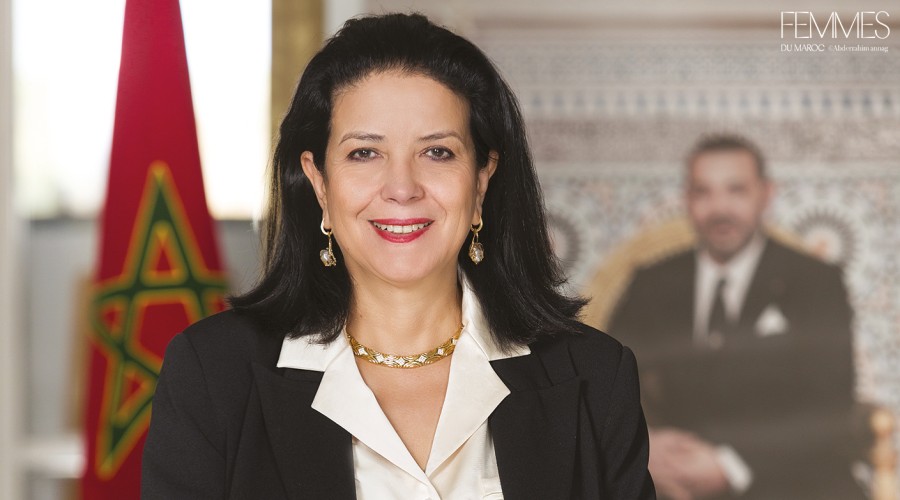
The Moroccan Ministry of Digital Transition and Administrative Reform announced the models on September 29, describing them as the first achievements from its partnership with Mistral. The initiative forms part of Morocco’s broader Maroc Digital 2030 strategy and its AI Made in Morocco roadmap.
Two AI tools focused on Darija
The first tool is a language-identification classifier capable of recognising and distinguishing different Arabic dialects, including Moroccan Darija.
The second is a speech-recognition model based on Mistral’s Voxtral technology, adapted for Moroccan Darija. It is designed to transcribe spoken Darija into written text, including conversations in which speakers switch between Arabic, French and English.
That capability is particularly relevant in Morocco, where multilingual communication is common and speakers can move between languages within the same conversation.
Instead of treating Darija as simply another variation of written Arabic, the new tools are intended to account for the way Moroccans actually communicate in everyday life.
Why Darija matters for AI
The development highlights a broader problem facing artificial intelligence across Africa: many of the continent’s languages remain poorly represented in AI systems.
Large AI models have generally benefited from enormous amounts of digital data available in languages such as English, French and other major global languages.
African languages and dialects, however, often have significantly less digitised and annotated data available for training AI systems.
This creates a gap between how people communicate in their daily lives and the languages that AI systems understand most effectively.
In Morocco, Darija is widely used in everyday communication, while Modern Standard Arabic is used in formal contexts. French also remains prominent in business, education and administration, while English is increasingly used in technology and international communication.
The result is a linguistic environment where an AI system may need to understand several languages—and sometimes several of them within the same sentence.
The new Voxtral-based model is specifically intended to handle this type of multilingual speech.
Open source could widen access
One of the most significant aspects of the announcement is that the tools are being made available in open-source form.
The Moroccan government says the models can be used by administrations, startups, researchers, developers and companies to build applications better suited to Moroccan users.
That could allow local developers to experiment with Darija-focused applications without having to develop an entire speech or language-processing system from scratch.
Potential applications identified by the ministry include public services, education, media, customer support, document digitisation and multilingual data processing.
For example, a Moroccan startup could potentially build a voice-based customer service system capable of understanding Darija, while a government agency could explore voice interfaces that allow citizens to interact with digital services using the language they use in everyday life.
The same technology could also support transcription for media organisations, digitisation of audio archives and tools for processing multilingual documents.
From AI strategy to actual technology
The release also represents an attempt by Morocco to move its AI ambitions beyond strategy documents and into practical technological infrastructure.
The government has positioned AI Made in Morocco as part of its effort to develop AI technologies that reflect the country’s linguistic, cultural and economic context.
The ministry says the wider programme is intended to support sovereign, responsible AI development while strengthening local innovation and technical capabilities.
The partnership with Mistral was established to support areas including education, applied research and knowledge sharing, with attention to ethical and inclusive AI development and data protection.
The Darija models represent the first publicly announced concrete outputs from that collaboration.
Africa’s local-language AI race
Morocco’s move is part of a wider conversation about the future of African AI.
Across the continent, researchers, governments and technology companies are increasingly recognising that AI adoption cannot depend entirely on models trained around languages and cultural contexts outside Africa.
Nigeria, for example, has been developing N-ATLAS, an open-source multilingual large language model designed to support languages including Hausa, Igbo, Yoruba and Nigerian-accented English.
Similar efforts are emerging across Africa as researchers attempt to build datasets, speech technologies and language models that better reflect local populations.
The stakes go beyond language.
If AI becomes an increasingly important interface for education, healthcare, government services, financial services and digital commerce, people whose languages are poorly supported could find themselves excluded from some of the benefits of the technology.
Local-language AI could therefore become an important part of Africa’s digital inclusion agenda.
The challenge goes beyond releasing a model
While Morocco’s release represents a significant step, the real test will be how well the models perform in everyday use.
Speech recognition systems can struggle with background noise, different accents, pronunciation, code-switching and variations in how people speak.
For Darija, these challenges can be particularly important because speakers may move between Darija, Modern Standard Arabic, French and English depending on the situation.
The Moroccan government has identified multilingual switching as one of the capabilities of the speech-recognition model.
However, independent performance testing will be important in determining how effective the technology is across different speakers, environments and real-world applications.
Questions around training data, accuracy, licensing and responsible use will also become increasingly important as developers begin incorporating the models into products and services.
A potential blueprint for African AI
Morocco’s approach points to a broader possibility for African countries: rather than waiting for global AI companies to solve local-language challenges, governments and local technology ecosystems can work together to develop AI infrastructure around their own linguistic realities.
The importance of the initiative may therefore extend beyond Darija.
For Africa, the question is increasingly becoming not only how quickly the continent adopts AI, but also whether Africans can help shape the technologies themselves.
By making Darija-focused AI tools available to local developers and researchers, Morocco is attempting to build part of that technological foundation.
The next stage will be turning those models into widely used applications and demonstrating that AI designed around African languages can move from research projects into tools that genuinely improve how people interact with technology.
For Morocco, the Darija models are a first step.
For Africa’s broader AI ecosystem, they offer another example of why local languages, local data and local developers will matter in determining who participates in the continent’s AI future.