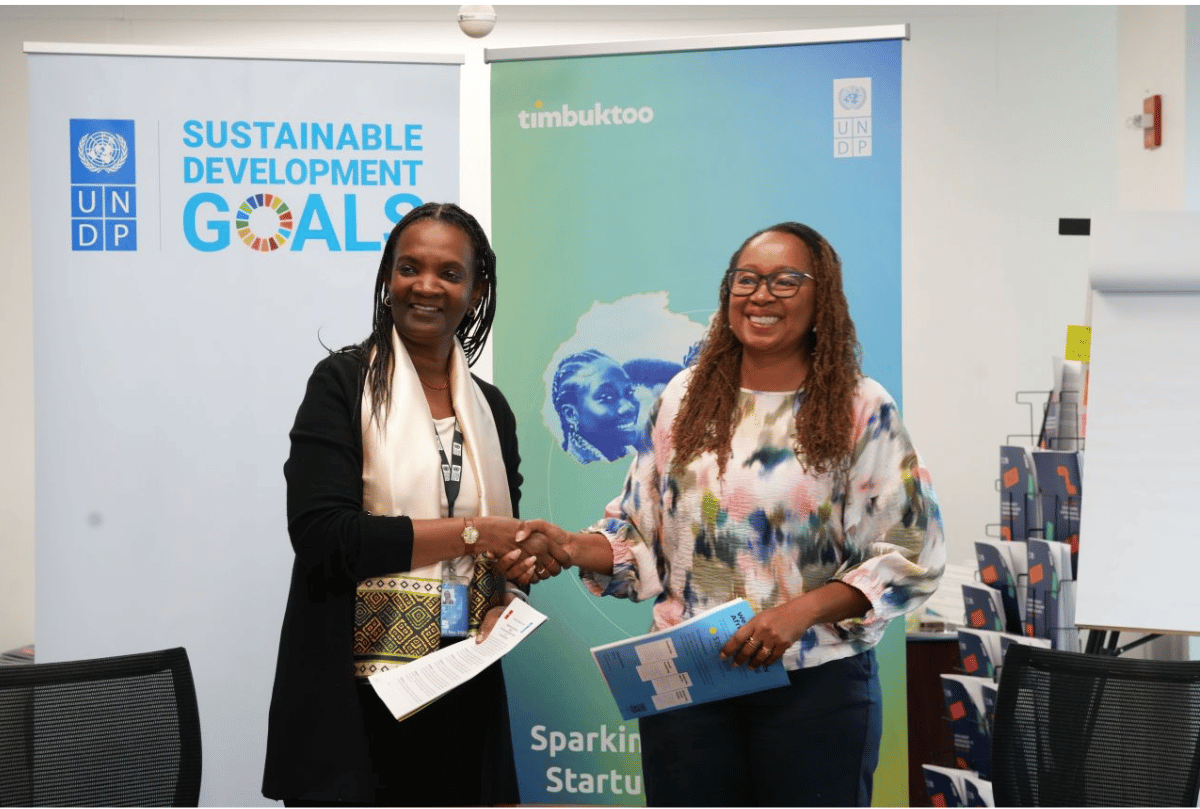
Africa’s push to build artificial intelligence systems that reflect its own languages, communities and development priorities has received a new boost after the United Nations Development Programme (UNDP) and the GSMA announced a strategic partnership to support African-led AI innovation.
Announced on October 2, 2026, in New York, the partnership will bring together the GSMA’s mobile-industry networks and expertise with UNDP’s development programmes and innovation platforms to help African innovators develop, deploy and scale AI solutions.
A major focus of the collaboration will be AI designed for African languages, an area that researchers and technology organisations increasingly see as essential to making AI more accessible across the continent.
Moving African AI from pilots to scale
According to UNDP, the partnership will connect African talent with opportunities to build and deploy AI solutions addressing the continent’s priorities.
The organisations will work through the UNDP’s timbuktoo initiative, which supports African innovators developing solutions to development challenges.
One of the partnership’s immediate areas of focus will be improving access to compute infrastructure for priority AI pilots.
Access to computing power remains one of the major challenges facing AI developers in Africa. While researchers and startups across the continent are developing locally relevant AI applications, the cost and availability of computing resources can make it difficult to train, test and scale sophisticated AI systems.
The UNDP-GSMA partnership aims to help address that gap by connecting innovators to infrastructure as well as real-world opportunities to deploy their technologies.
The collaboration will also explore pathways for locally developed AI solutions to become sustainable and reach larger markets.
That could be significant for African startups and researchers whose projects often struggle to move from promising prototypes to commercially viable or widely deployed products.
Why African-language AI is becoming a priority
For millions of Africans, the usefulness of an AI system depends partly on whether it understands the languages they actually speak.
Yet many African languages remain underrepresented in today’s AI ecosystem.
Large language models have benefited from enormous amounts of digital data available in languages such as English, French and Mandarin, while many African languages have far smaller datasets available for training AI systems.
This creates a digital inclusion problem.
If AI becomes increasingly embedded in education, healthcare, government services, financial services and online commerce, people who communicate primarily in languages poorly supported by AI could face another barrier to accessing digital services.
The UNDP-GSMA partnership is therefore placing African-language AI near the centre of its collaboration.
The organisations say their work will support solutions that reflect Africa’s linguistic and local realities, helping more people and businesses participate in the continent’s digital transformation.
Building on ATLAS Umoja AI
The new partnership builds on GSMA’s broader work on African-language artificial intelligence, particularly ATLAS Umoja AI.
Launched in July 2026 with African governments, technology companies and research organisations, ATLAS Umoja aims to bring together expertise, datasets and best practices to accelerate the development of AI systems that work better with African languages and cultures.
The initiative involves governments including Nigeria, Kenya, Namibia, Benin and Togo, alongside technology and AI organisations.
Its broader objective is to develop AI “in Africa, by Africa, for Africa”, while still allowing international participants to contribute to the ecosystem.
The GSMA says the initiative is designed to address some of the fundamental challenges surrounding African-language AI, including data, models, computing capacity, talent and market adoption.
The UNDP partnership gives this effort another potential channel for connecting language technology with development programmes and African innovators.
From data to deployment
Developing an AI model is only one part of the challenge.
African researchers also need access to high-quality datasets, computing infrastructure, technical expertise, funding and users who can test and adopt the resulting technologies.
UNDP has itself highlighted the importance of the broader data-to-AI value chain, arguing that linguistic and cultural diversity needs to be considered throughout the journey from data collection to AI deployment.
The organisation’s recent work on local-language AI has emphasised that simply making an AI system available does not automatically mean that it will deliver meaningful development outcomes.
For African-language AI, this means building systems that are not only technically capable but also useful, trusted and relevant to the communities they are designed to serve.
The UNDP-GSMA partnership appears aimed at addressing some of these gaps by combining infrastructure, talent, innovation programmes and industry networks.
Universities and AI labs to play a role
The collaboration will mobilise expertise from the networks of both organisations, including UNDP-supported University Innovation Pods (UniPods), AI Labs, universities and other ecosystem partners.
This could give researchers and young developers additional pathways to participate in AI development.
For Africa’s growing technology ecosystem, universities are particularly important because they can provide researchers, datasets, technical expertise and potential applications for AI.
Connecting those institutions with industry and development organisations could also help reduce the gap between academic research and commercially or socially useful AI products.
UNDP says the partnership is intended to accelerate the development, deployment and scaling of AI solutions across Africa.
A growing African AI ecosystem
The announcement comes at a time when African countries are increasingly developing their own AI strategies, models and infrastructure.
Nigeria, for example, has been developing N-ATLAS, an open-source multilingual AI model designed around Nigerian languages and Nigerian-accented English.
Morocco has also recently released open-source AI tools focused on Moroccan Darija, including a dialect identification model and a speech-recognition model.
These initiatives point to a broader shift in Africa’s AI conversation.
The debate is gradually moving from how Africa can adopt AI developed elsewhere to how African researchers, startups, governments and communities can participate in building AI systems themselves.
The UNDP-GSMA partnership is part of that emerging ecosystem.
The infrastructure challenge remains
However, scaling African AI will require more than partnerships and models.
Access to affordable computing remains a major challenge. So do internet connectivity, electricity reliability, AI skills, funding, high-quality datasets and the ability of startups to access markets.
UNDP recently warned that Africa’s AI transition will be shaped not only by technology but also by access to skills, finance, data and infrastructure. The distribution of AI’s economic benefits will depend in part on whether African workers and companies can participate meaningfully in the emerging AI economy.
This makes the compute component of the UNDP-GSMA partnership particularly important.
For African AI developers, having a promising idea or dataset is not enough if they cannot afford the computing resources required to train and deploy their systems.
Can Africa build AI on its own terms?
The UNDP-GSMA partnership reflects a growing ambition across the continent: to ensure Africa is not merely a consumer of artificial intelligence but also a developer and owner of AI solutions responding to its own needs.
African-language AI sits at the centre of that ambition.
From Hausa, Yoruba and Igbo to Darija, Swahili and hundreds of other African languages, the continent’s linguistic diversity presents both a challenge and an opportunity for AI developers.
If successful, initiatives such as ATLAS Umoja and the new UNDP-GSMA collaboration could help create the datasets, infrastructure, talent networks and applications needed to make those languages more visible in the global AI ecosystem.
But the ultimate measure will be what happens beyond the announcements.
The question is whether African developers will gain sustained access to computing resources, whether local-language models will become accurate enough for everyday applications, and whether startups can turn these technologies into products that reach millions of users.
For now, the partnership adds another significant piece to Africa’s emerging AI ecosystem.
And as the continent’s AI ambitions grow, the message from the initiative is becoming increasingly clear: Africa wants its AI future to be built around African talent, African languages and African priorities.