NAIROBI. Kenyans were already among the world’s most enthusiastic users of ChatGPT. Now the government is trying to make sure the people who run the state can keep up.
Earlier this month, the Kenya School of Government (KSG) launched a new digital training arm and, on the same day, graduated 1,239 public officers from an artificial intelligence programme. The event, reported by Tech Africa News, puts a concrete number on a question many African governments are quietly asking: if citizens are adopting AI faster than the civil service, who is going to regulate, buy and deploy it?
A new institute and a large graduating class
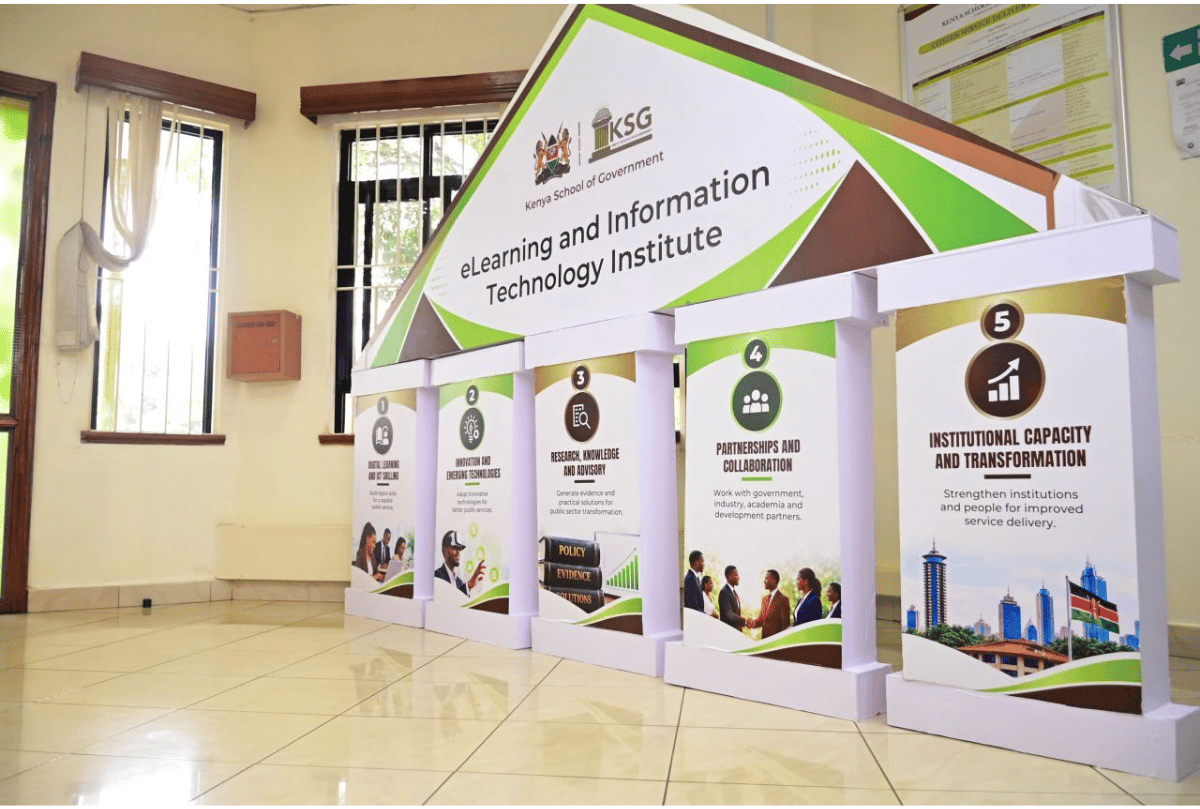
The institution launched is the eLearning and Information Technology Institute, known as eLITI, which sits under KSG. According to the report, it is meant to bring together digital learning and ICT training, emerging technologies, research and advisory work, and partnerships under a single identity.
The 1,239 graduates completed the UNESCO Oxford Programme on Artificial Intelligence and Digital Transformation in Government. The course is aimed at helping public servants understand and apply digital technologies in the day to day work of government.
At the launch, KSG also showed off what the institute has been building: virtual reality simulations, AI applications and AI agents, which are slated for deployment through Konza Technopolis, Kenya’s technology and innovation hub. The institute also plans to take practical digital skills training to communities through the KSG Under the Tree Series, an initiative designed to bring learning closer to people at the grassroots.
The figure of 1,239 graduates comes from a single published report and has not been independently confirmed by AI Reports Africa at the time of writing.
Part of a wider push
The launch did not happen in isolation. KSG, which marked its 100th anniversary this year, has been repositioning itself as a digitally enabled centre for governance and leadership training.
In May, the school signed a partnership with Huawei Kenya under which the company will support the training and certification of 2,000 government officials and 50 KSG technical staff between 2026 and 2029, with a focus on AI and cybersecurity. KSG Director General Nura Mohamed said the aim was to equip public officers to respond to emerging governance and service delivery challenges.
In July, at the centenary celebrations at KSG’s Kabete campus, the school graduated 432 Assistant County Commissioners with diplomas in public administration. Public Service Cabinet Secretary Geoffrey Ruku used the occasion to urge civil servants to embrace emerging technologies and said Kenya is positioning itself as Africa’s leader in AI innovation. That graduation was a general public administration programme and should not be confused with the AI course behind the 1,239 figure.
The citizens got there first
The urgency makes more sense against the backdrop of how Kenyans themselves use AI.
The July 2025 Global Digital Report from DataReportal and Meltwater found that 42.1 percent of Kenyan internet users aged 16 and above had used ChatGPT in the previous month, the highest share of any country surveyed. The United Arab Emirates (42 percent), Israel (41.4 percent), Malaysia (39.8 percent) and Brazil (39.7 percent) followed. In Africa, South Africa came next at 34.3 percent, ranking eighth globally. The same report placed Kenya third in the world for visits to the ChatGPT website, behind only the United States, with 4.81 percent of global traffic.
The numbers need careful reading. They measure the share of internet users, not the whole population, and they reflect self-reported use over a single month. Still, the direction is clear. Analysts point to a very young population, with a median age of about 20, and widespread mobile internet access that puts AI tools within reach even outside major cities.
A later report goes further. Citing the Digital 2026 Mid-Year Global Update, Kenyan media reported in April that 97.5 percent of internet users aged 16 and above engage with AI tools every month. That figure covers AI tools in general rather than ChatGPT alone, and its scale is far above the earlier ChatGPT-specific data, so readers should treat it with caution until the underlying methodology is scrutinised. Philip Thigo, Kenya’s Special Envoy for Technology, said at the time that Kenya’s use of AI tools was surpassing that of many wealthier countries, and argued the country should now be building more data centres to handle its own data.
What to watch
Training 1,239 officers is a meaningful start in a public service that numbers in the hundreds of thousands, but it is only a start. The harder questions come after the certificates are handed out. Will graduates have the authority and the tools to change how ministries and county offices work? Will the AI agents showcased at the launch reach real service delivery, and who will oversee them once they do? And can training capacity, including the Huawei-backed programme running to 2029, scale fast enough to match the pace at which ordinary Kenyans are adopting AI?
For now, the signal is that Nairobi wants its civil service to be a participant in the AI era and not merely a spectator. Whether that ambition translates into better public services is the story to follow.
Sources: Tech Africa News (Oct 13, 2026); DataReportal and Meltwater, Global Digital Report (July 2025); ITWeb Africa; Business Daily; Capital FM; The Star; Telecoms Chamber.