ABUJA | Two days of plenaries, masterclasses and a live innovation contest at the AI and Democracy Forum (AIDF) 2026 ended this week with a message that organisers, regulators and technologists kept returning to: artificial intelligence will shape Nigeria’s 2027 general elections, but it must not be allowed to decide them.
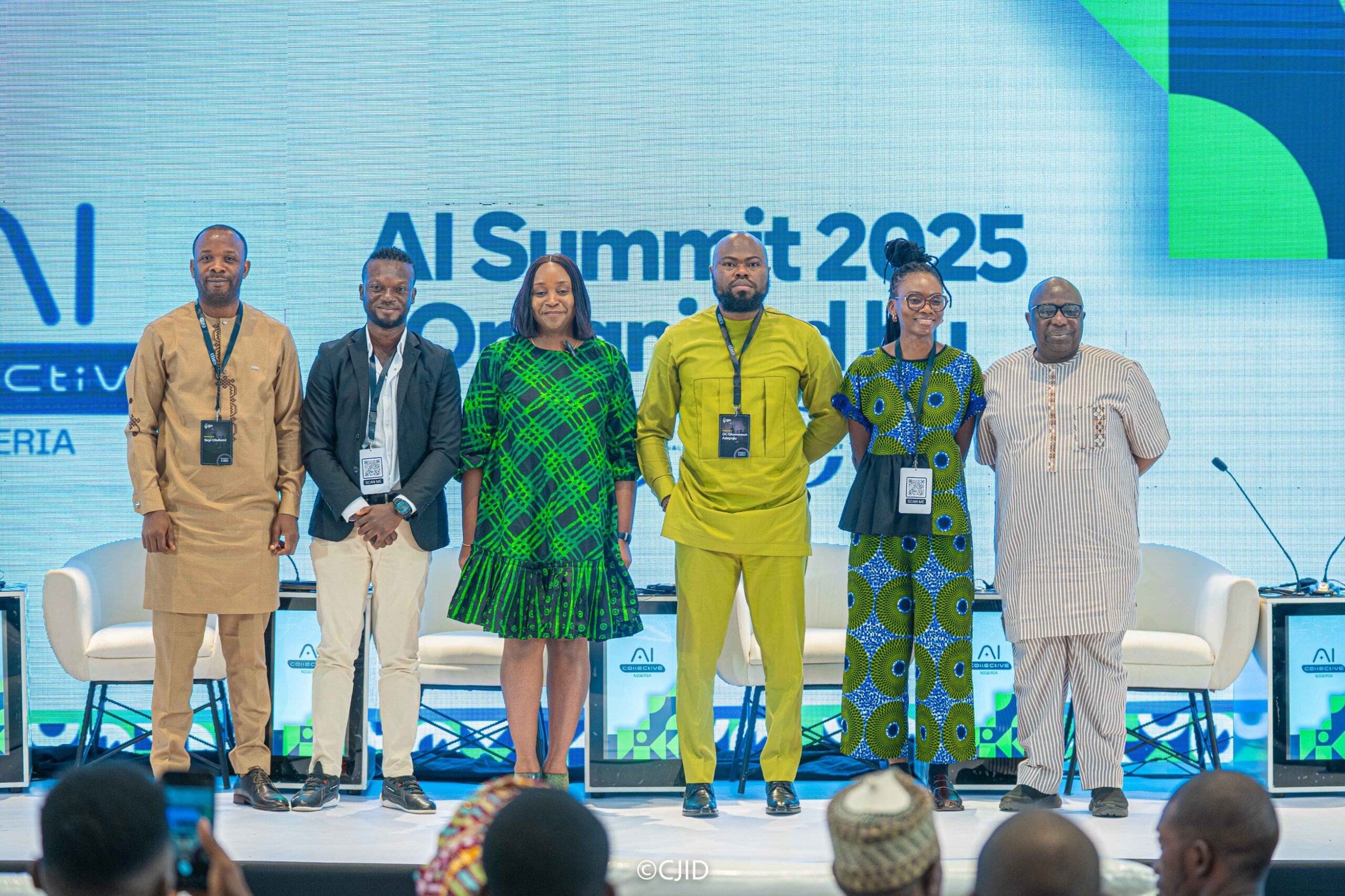
The forum ran on 14 and 15 October at the Congress Hall of the Transcorp Hilton in Abuja. It was organised by Yiaga Africa in partnership with the Independent National Electoral Commission (INEC), Microsoft, TikTok, the Centre for Journalism Innovation and Development (CJID) and the DataHyte Foundation. Its guiding question was blunt: “Will Algorithms Determine the 2027 Vote?”
INEC draws a line
Delivering the keynote on opening day, INEC Chairman Professor Joash Amupitan said technology must never replace the will of voters. Algorithms, he argued, may predict patterns and suggest preferences, but they cannot cast a ballot or decide who governs Nigeria.
He placed the stakes in numbers. The 2027 polls, he said, will be Africa’s largest democratic exercise, with more than 103 million registered voters, 176,846 polling units and 774 local government areas. The elections will cover presidential, National Assembly, governorship and state assembly contests.
Amupitan acknowledged both sides of the technology. AI, he said, could improve election logistics, route planning, result auditing, biometric database management, multilingual voter engagement and cybersecurity. But he also named the threats: deepfakes, synthetic media, targeted political advertising, algorithmic bias and automated cyberattacks.
He told delegates the commission had procured additional Bimodal Voter Accreditation System (BVAS) devices and digitised candidate nominations through its nomination portal, which processed more than 15,000 nominations across 22 political parties.
Distrust is the backdrop
Yiaga Africa’s Executive Director, Samson Itodo, set a sober tone in his welcome address. Public confidence in elections remains low, he said, pointing to the organisation’s recent national voting intention survey, which found that many Nigerians doubt the credibility of the process and fear their votes will not count in 2027. He tied part of that distrust to technology problems during the 2023 elections.
Itodo praised INEC’s leadership in adopting AI, but cautioned that technology alone cannot guarantee credible elections. The integrity of the people running the systems matters just as much, he said.
He also issued a pointed warning about the growing number of AI-powered platforms built to aggregate election results. Only INEC has the legal authority to declare results and winners, Itodo said. Other organisations may independently aggregate results for monitoring and oversight, but they must not undermine electoral integrity.
The warning carries weight because civil society itself has experimented with the tools. In August, Bloomberg reported that Yiaga Africa and the Athena Centre for Policy and Leadership used AI to tally ballots in the Osun State governorship election, producing figures well before INEC declared its result.
Three plenaries, one worry: what is real?
Day one was built around three plenaries. The opening session framed what AI means for the credibility of the 2027 elections. A second examined emerging use cases, from voter registration and results management to detecting misinformation, alongside questions of data protection, algorithmic bias, transparency and human oversight.
The third, titled “The War for Reality,” tackled deepfakes, synthetic media and foreign information manipulation. It asked how convincing fake faces, voices and videos could impersonate candidates and election officials, and what coordinated response is needed to protect electoral information.
Training for the front line
Alongside the plenaries ran the AI in Elections Academy, a set of parallel masterclasses designed for specific roles. Election managers and INEC staff studied AI in election administration. Civil society groups examined how to oversee generative AI. Journalists took a session on reporting elections in the age of AI, and security agencies explored intelligence, early warning and cyber resilience.
Itodo said the structure reflected what organisers found in the lead-up to the forum: most institutions need capacity building to capture AI’s benefits and manage its risks. Yiaga Africa worked with Microsoft on an AI 101 session for election officials, and trained journalists with Google on safeguards for reporting in the age of AI.
Day two: who makes the rules?
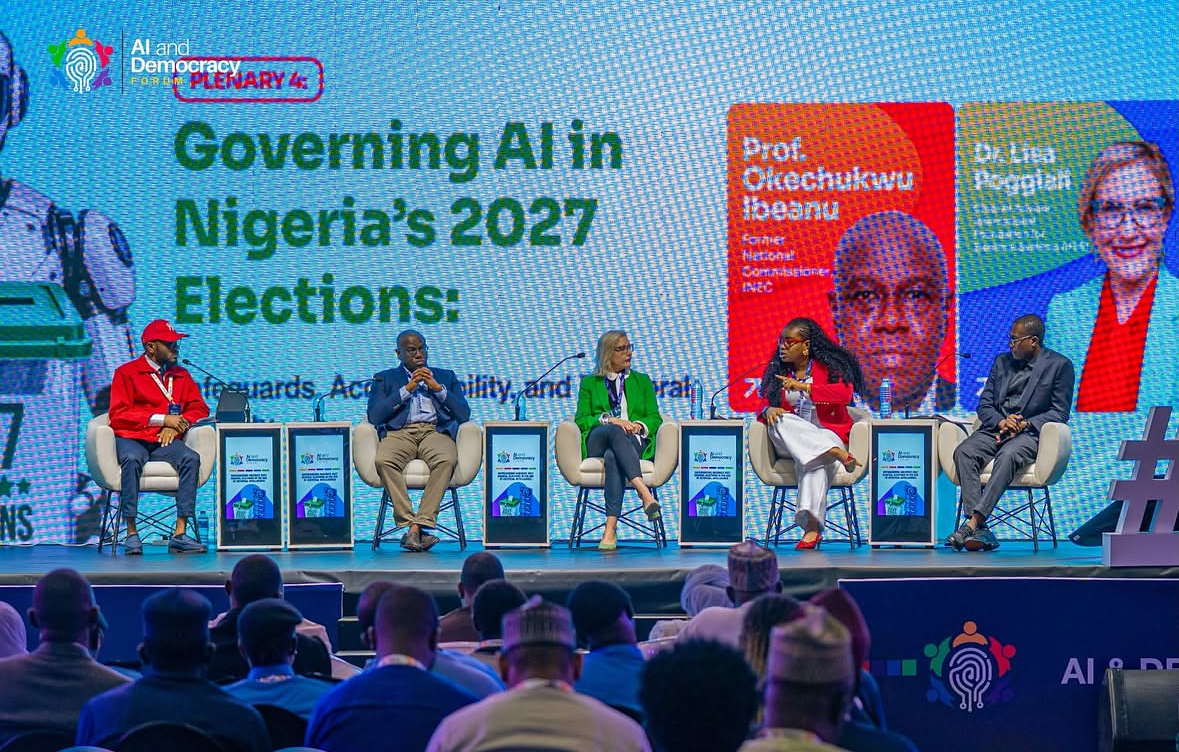
The second day turned from risk to governance. Plenary 4 examined laws, institutional responsibilities, procurement rules, oversight and remedies for the misuse of AI in elections, asking who is accountable when AI is used in an electoral process. Plenary 5 put technology platforms in conversation, inviting them to explain their preparations for 2027, including measures against AI-generated content and disinformation, and how they will coordinate with INEC, regulators and civil society.
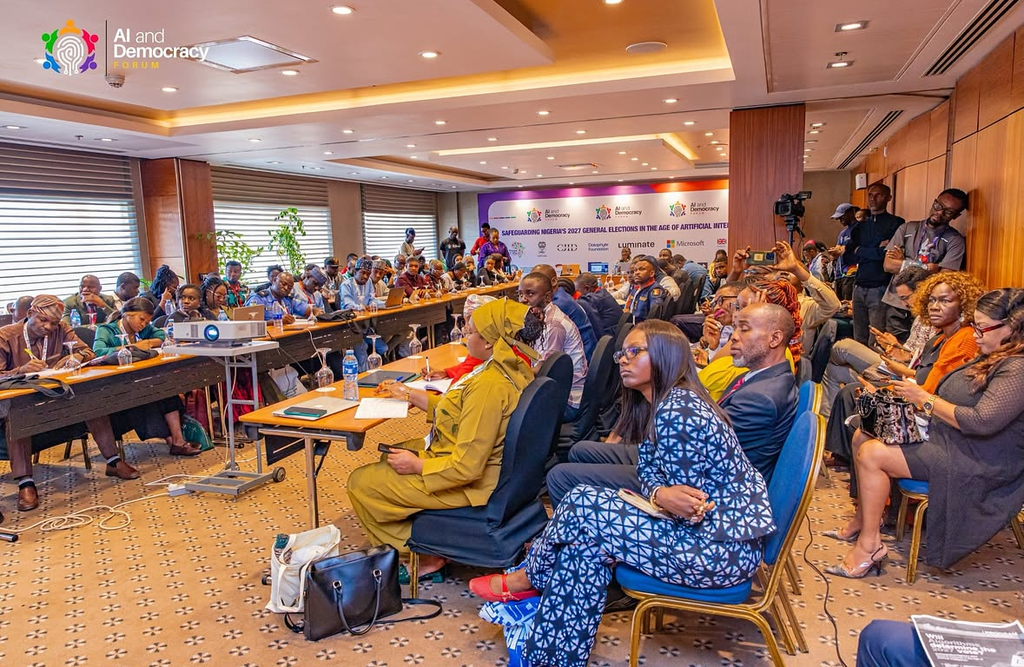
The most hands-on session was the AI Detection Lab, where journalists, fact-checkers, observers and electoral staff practised identifying and verifying AI-generated and manipulated content. A separate session on platform accountability put civil society and technology companies at the same table. INEC officials also took part in a closed-door masterclass on the AI Governance Playbook for Elections, covering how to design, procure, deploy and oversee AI systems responsibly.
The Sandbox: ideas meet the electoral process
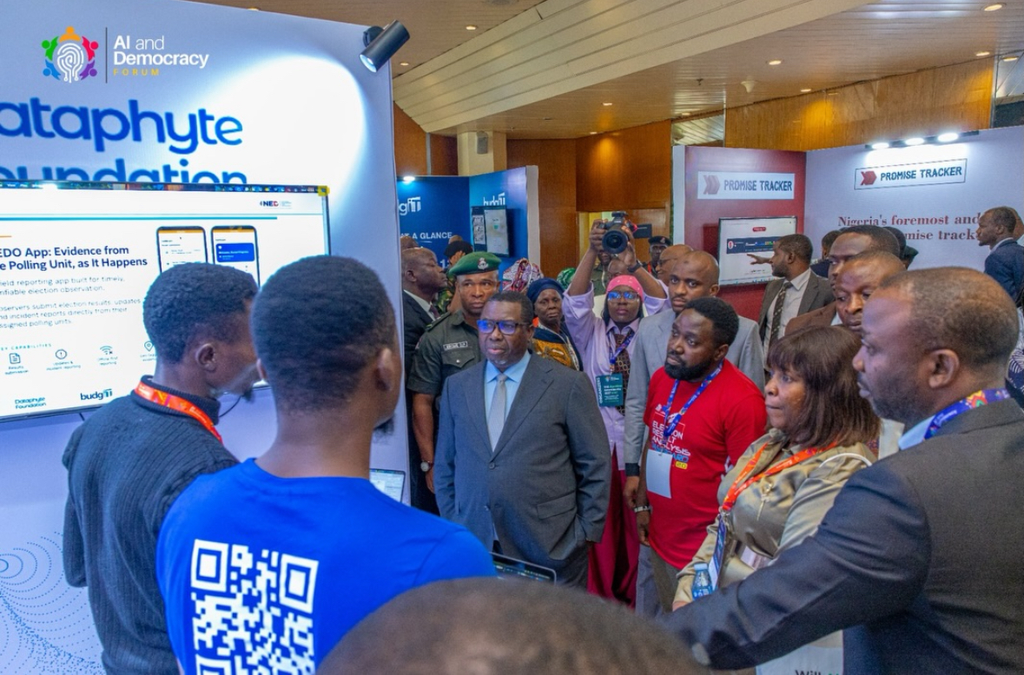
The forum closed with the AI for Elections Sandbox grand finale, where shortlisted innovators pitched AI-powered solutions live to a jury of election administrators, technology leaders, investors, civil society and democracy practitioners. Applications for the Sandbox opened on 16 September and closed on 24 September, with a shortlist announced on 2 October.
Yiaga Africa has named Election GPT, built by PawaVox, as the Sandbox winner. The winner will receive a ₦13,000,000 cash prize, alongside access to technical support to further develop, refine and scale the innovation ahead of Nigeria’s 2027 general elections.
What happens next
The forum did not settle every question it raised. The legal limits of AI-driven result aggregation, the duties of platforms during the campaign, and the practical readiness of election staff and newsrooms will be tested long before 2027 voting begins.
But the central position was clear and was repeated from the podium. Machines may assist, inform and even mislead, yet the authority to count votes and declare results belongs to institutions and citizens. As the forum’s own closing question put it: when the machines learn to speak in our name, who will make sure democracy still speaks in ours?