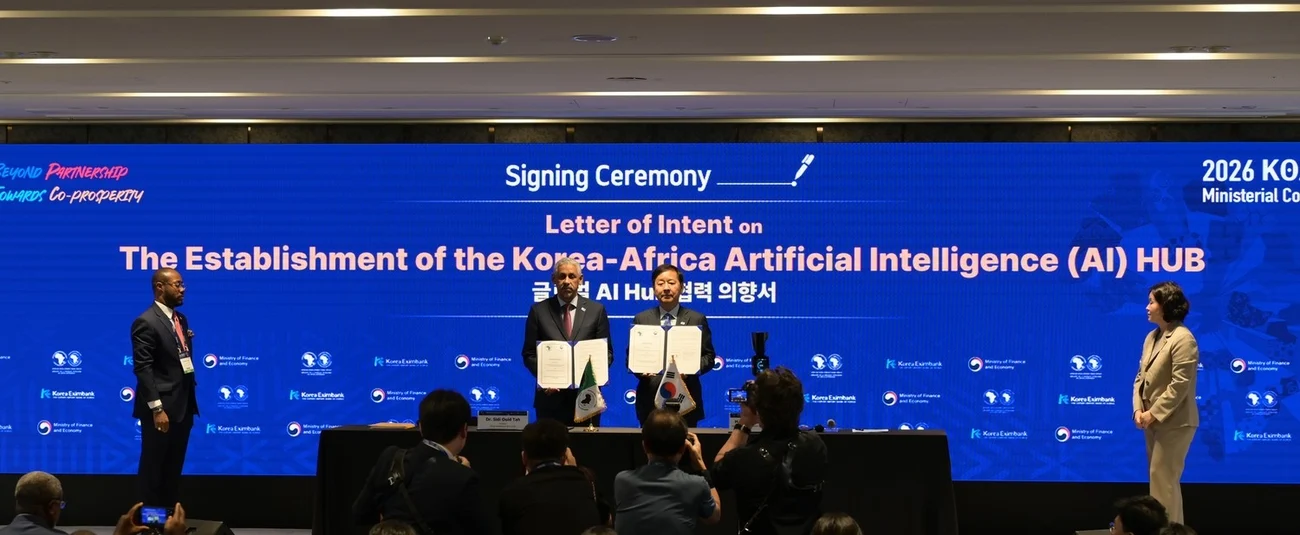
The initiative aims to coordinate $1 billion annually in investment over the next decade, with five countries set to participate initially before expansion to 20 countries by the end of 2027.
The African Development Bank Group (AfDB) and the United Nations Development Programme (UNDP) are stepping up efforts to accelerate artificial intelligence adoption across Africa, with a continental initiative targeting $10 billion in coordinated investment over the next decade and the potential to support 25 million new jobs by 2035.
The renewed push for the AI 10 Billion Initiative follows a visit by a UNDP delegation to the African Development Bank’s headquarters in Abidjan, Côte d’Ivoire, on October 14, 2026. The meeting focused on moving the initiative from its launch phase towards implementation, including the preparation of projects that can attract financing and deliver measurable economic benefits.
According to the African Development Bank, the programme is designed to coordinate approximately $1 billion annually from public institutions, development finance institutions, private investors and other partners to strengthen AI adoption and improve productivity across African economies.
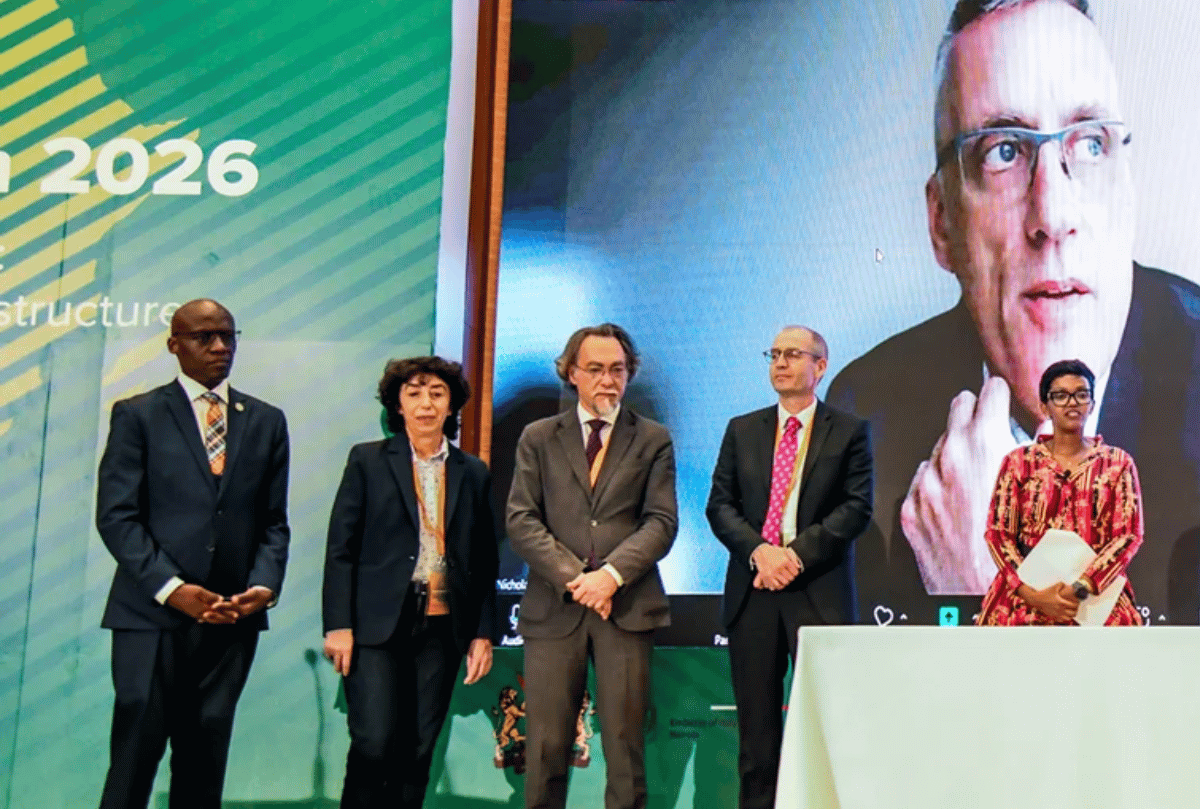
The initiative was launched at the Nairobi AI Forum in February 2026 as a partnership involving AfDB, UNDP, the AI Hub for Sustainable Development and private sector partners. Its broader objective is to help African countries move beyond AI strategies and pilot projects towards practical applications that create jobs, strengthen businesses and support inclusive economic growth.
Africa’s AI Opportunity Could Add $1 Trillion to GDP
The initiative builds on the African Development Bank’s report, Africa’s AI Productivity Gain: Pathways to Labour Efficiency, Economic Growth and Inclusive Transformation, which projects that inclusive AI adoption could contribute up to $1 trillion in additional GDP to Africa’s economy by 2035.
The report identifies agriculture, wholesale and retail, manufacturing, finance, and health as five sectors with particularly strong potential to benefit from AI adoption. Together, these sectors could account for approximately 58 per cent of the projected economic gains, equivalent to about $580 billion.
In agriculture, AI could support precision farming, improve crop monitoring, strengthen weather forecasting and help farmers make better decisions about planting, irrigation and pest management.
In wholesale and retail, AI-powered systems could improve inventory management, demand forecasting, logistics and customer services. Manufacturers could use AI to optimise production, predict equipment failures and reduce operational costs.
Financial institutions could deploy AI to improve credit assessments, detect fraud and expand access to financial services, while healthcare providers could use AI-assisted tools to support medical diagnostics, patient monitoring and the management of limited health resources.
However, these benefits will depend on whether businesses and public institutions can access the infrastructure, skills, data and financing needed to deploy AI effectively.
Five Countries to Begin Implementation
Under the implementation framework announced by the African Development Bank, the initiative will begin in five countries before expanding to 20 by the end of 2027.
The programme will follow a three-stage approach designed to turn national AI priorities into projects capable of attracting investment.
The first stage will involve analysing each country’s economy to identify sectors where AI could deliver meaningful productivity gains. This assessment will help governments and partners determine where AI investments are most likely to produce economic and social benefits.
The second stage will focus on preparing public and private sector projects for financing. Rather than concentrating solely on AI research or technology development, the initiative aims to develop practical projects that can be implemented and scaled.
The third stage will bring governments, investors, development finance institutions and regional economic communities together through investment platforms designed to mobilise the resources required to execute those projects.
The African Development Bank will contribute its financing capacity, economic research and relationships with its 54 regional member countries. UNDP will provide country-level expertise and technical support through its AI Hub for Sustainable Development and its Platform for Investment and Technical Assistance.
The partners are also inviting governments, development finance institutions, private investors and philanthropic organisations to participate in the initiative.
Jobs and Skills at the Centre of Africa’s AI Future
Job creation is a central objective of the initiative, particularly as Africa prepares for a significant expansion of its working-age population.
The African Development Bank estimates that more than 300 million young Africans will enter working age over the next decade. This creates an urgent need for investments that can expand productive employment, strengthen businesses and equip workers with skills relevant to an increasingly AI-enabled economy.
The initiative’s target of supporting up to 25 million new jobs by 2035 will depend on how effectively AI adoption translates into business expansion, new industries and greater economic activity.
Potential opportunities extend beyond software engineering and other specialised technology careers. AI adoption could also create demand for data services, digital infrastructure, business process automation, AI-enabled agricultural services and technology-supported healthcare.
Small and medium-sized enterprises could benefit from tools that reduce administrative costs, improve customer engagement and help businesses reach new markets. Entrepreneurs could also build locally relevant AI products and services for African consumers and industries.
Nevertheless, the transition will require investment in digital literacy, technical education and workforce reskilling. Without these investments, many workers and small businesses could struggle to benefit from the technology, while automation could disrupt some existing jobs.
Infrastructure and Financing Remain Critical Challenges
Despite the continent’s growing interest in AI, significant barriers continue to limit its adoption.
Reliable electricity, affordable internet access, computing capacity, quality datasets and specialised skills remain unevenly distributed across African countries. These challenges can make it difficult for startups, universities, public institutions and smaller businesses to develop or deploy AI solutions at scale.
The AI 10 Billion Initiative is designed to help address these gaps by aligning investment with the infrastructure and capabilities required for adoption. Its approach reflects the African Development Bank’s emphasis on five interconnected enablers: data, computing capacity, skills, trust and capital.
Financing alone, however, will not guarantee results. Governments will need effective policies, appropriate regulatory frameworks and safeguards to ensure that AI systems are deployed responsibly.
African countries will also need to consider data protection, cybersecurity, algorithmic bias and the representation of African languages and communities in AI technologies.
Ensuring that African businesses and researchers can participate in developing and owning AI solutions will be important if the continent is to capture more of the value generated by the technology.
Turning AI Ambitions into Measurable Results
The renewed partnership between AfDB and UNDP signals a shift towards implementation and investment coordination in Africa’s AI development agenda.
Rather than treating AI adoption as a technology-sector issue alone, the initiative seeks to integrate AI into broader economic development priorities, including industrialisation, agricultural productivity, financial inclusion and healthcare delivery.
Its success will ultimately depend on whether the proposed investment coordination produces projects that attract funding, reach businesses and communities, and generate measurable improvements in productivity and employment.
For Africa, the opportunity is substantial, but the projected economic gains and job creation figures remain potential outcomes rather than guaranteed results.
As implementation begins in five countries, the expansion to 20 countries by the end of 2027 will provide an important early indication of the initiative’s ability to translate continental ambitions into practical investments.
With the 2035 deadline approaching, the challenge for African governments and their partners will be to ensure that AI becomes more than a source of technological promise and instead contributes to productive businesses, better public services and broader economic opportunities across the continent.
Sources: African Development Bank Group, October 14, 2026 announcement on the AI 10 Billion Initiative; AfDB, Africa’s AI Productivity Gain: $1 trillion in potential additional GDP by 2035.