
As African countries explore artificial intelligence to strengthen healthcare delivery, questions around clinical evidence, regulation, affordability and sustainable adoption are becoming increasingly urgent.
Artificial intelligence is increasingly becoming part of the conversation about the future of healthcare in Africa. From AI-assisted diagnosis and disease surveillance to digital health platforms and automated patient support, emerging technologies are creating new possibilities for healthcare delivery across the continent.
But as governments, technology companies and health innovators explore these opportunities, a more fundamental question is emerging: can African healthcare systems translate AI innovation into reliable, accessible and sustainable services for patients?
The question is particularly relevant as African health technology stakeholders move beyond discussions about what AI can do towards examining what it takes to implement the technology in real healthcare settings.
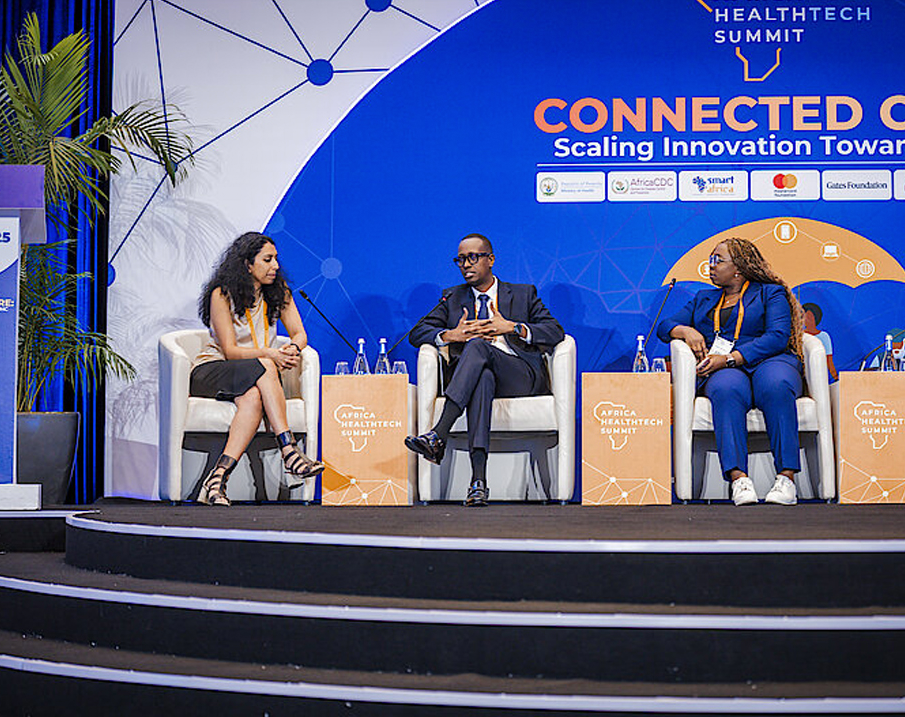
At the Africa HealthTech Summit (AHTS) 2026 in Kigali, Rwanda, discussions centred on building intelligent health systems, integrating digital technologies and creating pathways for innovations to move from development to implementation. The summit’s emphasis on connected systems reflects a growing recognition that technology cannot transform healthcare through isolated products alone. Africa HealthTech Summit
Villgro Africa, a health innovation and enterprise-support organisation, also highlighted the importance of aligning innovation with healthcare priorities, generating evidence of impact, securing appropriate financing and establishing clear commercialisation pathways.
These priorities point to a central challenge for AI-powered health technology in Africa: developing a solution is only the beginning. Ensuring that healthcare providers can trust, adopt, finance and sustain it may be the more difficult task.
Beyond AI-powered diagnosis
AI applications in healthcare extend beyond interpreting medical images or helping clinicians identify possible diseases. They can also support clinical decision-making, health information management, disease surveillance, drug development and the organisation of healthcare services.
The World Health Organization (WHO) identifies these areas as important applications of AI while emphasising the need for safety, equity, ethical governance and evidence-based implementation.
For African countries dealing with uneven access to healthcare professionals and specialist services, appropriately designed AI tools could help extend certain services to underserved populations. Digital platforms may also create additional ways for patients to obtain health information and connect with qualified healthcare professionals.
However, the potential benefits should not be confused with proven outcomes. An AI system that performs well in a controlled environment may not deliver the same results when deployed in a different country, language, clinical setting or patient population.
Differences in medical records, available equipment, connectivity, local disease patterns and the quality of training data can affect how well a system performs.
For AI health technology developers, this means that adapting existing models to African healthcare environments is not merely a technical consideration. It is central to whether those systems will be useful and safe.
The challenge of building AI for African patients
One of the most important questions surrounding AI in healthcare is whether the technology adequately represents the people expected to use it.
AI models trained predominantly on data from other populations may not perform equally well across all patient groups. Differences in skin tones, medical histories, local disease prevalence and the availability of diagnostic information can create challenges for some applications.
Language presents another barrier. Healthcare tools designed primarily for English-speaking or digitally literate users may be less accessible to people who communicate in local languages or have limited experience with digital services.
These challenges create an opportunity for African researchers, universities, hospitals and startups to participate more directly in developing and evaluating health AI.
Locally relevant datasets, carefully designed clinical studies and collaboration with frontline healthcare workers can help developers determine whether their products are appropriate for the populations they serve.
But collecting and using health data also raises questions about privacy, informed consent, cybersecurity and who controls information generated by African patients.
Without strong safeguards, the same technologies intended to improve access to healthcare could introduce new risks for patient confidentiality and public trust.
Regulation and clinical evidence remain critical
The rapid development of AI is putting pressure on healthcare regulators to ensure that innovation does not outpace appropriate safeguards.
A 2023 review of the regulatory landscape across 12 African countries identified gaps and fragmentation in the frameworks governing AI in healthcare and related areas. The review highlighted the importance of developing regulatory approaches that can address the specific challenges posed by AI-enabled medical technologies.
Since then, the policy conversation has continued to evolve. In Nigeria and elsewhere on the continent, questions around responsible AI adoption include how medical AI products should be evaluated, what evidence developers must provide, who remains accountable for decisions supported by algorithms and how systems should be monitored after deployment.
These questions become especially important when an AI tool is used to inform diagnosis, treatment or other consequential clinical decisions.
An AI-generated recommendation should not automatically be treated as a medical finding. Healthcare professionals need to understand the limitations of the systems they use, while patients need clarity about the role technology plays in their care.
The WHO’s approach to AI for health similarly stresses governance, collaboration and sustainable implementation, rather than technology adoption without adequate safeguards.
For African health technology companies, regulatory readiness and credible clinical evidence should therefore be treated as part of product development from the outset, not as obstacles to address only when expansion becomes necessary.
Ghana’s digital health strategy signals a policy shift
A recent development in Ghana illustrates how the discussion is moving towards incorporating AI into broader healthcare planning.
On 12 October 2026, the WHO Regional Office for Africa reported that Ghana’s Ministry of Health and Ghana Health Service, with support from WHO and the United Nations Development Programme (UNDP), were reviewing the country’s Digital Health Policy and Strategy for 2023–2027 to incorporate AI and strengthen the digital health ecosystem.
The review builds on work that includes a National Digital Health Evaluation Platform intended to monitor implementation and identify gaps in the country’s digital health strategy.
The development is significant because integrating AI into an existing health strategy requires more than introducing new software. It also involves examining infrastructure, governance, workforce capacity and the systems needed to evaluate whether digital interventions are delivering results.
Ghana’s approach offers an example of how governments can begin connecting AI ambitions with broader healthcare planning. Its eventual impact will depend on implementation and evidence of improved outcomes.
For other African countries, the challenge is to ensure that national AI ambitions translate into practical frameworks that support innovation while protecting patients.
Why promising health AI projects struggle to scale
Even when an AI health product demonstrates technical promise, its long-term viability may depend on factors beyond its algorithm.
Healthcare providers need to know whether a solution fits their existing workflows, whether staff can use it effectively, whether it can integrate with current systems and whether there is a reliable way to finance its continued operation.
This is particularly important for startups that depend on short-term grants or pilot projects. A technology may attract initial interest without establishing a sustainable source of revenue or a clear route to institutional adoption.
The issues raised by Villgro Africa at AHTS 2026 reflect this wider challenge. Stronger alignment with health-system priorities, appropriate financing, evidence of impact and commercialisation pathways can help determine whether an innovation moves beyond the pilot stage.
For AI health technology companies, this means engaging clinicians, patients, healthcare institutions and relevant public authorities early in development. It also means identifying who will pay for the service, who will use it and what measurable improvement it is expected to deliver.
In healthcare, commercial sustainability and public benefit must be considered together. A product that cannot be maintained may lose its value to patients, while a commercially successful product that fails to demonstrate safety or meaningful benefit may not deserve wider adoption.
The opportunity for African health technology innovators
The next phase of AI in African healthcare will require more than importing established technologies or adding AI features to existing digital platforms.
African innovators can contribute by developing solutions around specific healthcare needs, including access to specialist advice, patient education, clinical workflow support and the delivery of services to underserved communities.
Such efforts should begin with clearly defined problems and realistic assessments of where AI can add value. In some cases, a simpler digital tool or a better-connected healthcare service may be more appropriate than a complex AI system.
Where AI is used, developers should establish clear performance measures, involve qualified healthcare professionals and evaluate outcomes in the populations the technology is intended to serve.
Investment will also matter. Funding that supports clinical validation, regulatory readiness, local research and long-term deployment can be as important as funding for initial product development.
The goal should not be to maximise the number of AI health applications launched across the continent. It should be to identify which solutions work, for whom, under what conditions and at what cost.
What comes next?
The AI in Health Summit 2026, scheduled for 19–20 October in Abuja, Nigeria, is another opportunity for stakeholders to examine how AI can strengthen health systems and support universal health coverage. Its agenda includes country-level AI governance, health data infrastructure and pathways for scaling innovation.
As these conversations continue, African governments and healthcare institutions face a dual responsibility: create room for responsible experimentation while ensuring that patients are protected from unproven or poorly implemented technologies.
AI could become a valuable tool for strengthening healthcare across Africa, but its contribution will depend on the quality of the systems surrounding it.
That means investing in local research, developing appropriate regulation, building healthcare workforce capacity, protecting patient data and creating sustainable routes from innovation to adoption.
Ultimately, the measure of success will not be how sophisticated an AI model appears or how many health technology startups enter the market. It will be whether these technologies help healthcare professionals deliver better services, enable patients to access appropriate care and strengthen health systems over time.
For Africa’s AI health technology sector, the next frontier is not simply building smarter machines. It is building the evidence, institutions and partnerships that allow those machines to serve people safely and effectively.


