At a ministerial meeting in Libreville, the African Union pressed for homegrown AI capacity, stronger cybersecurity and a common continental voice ahead of the global telecom summit in Doha.
LIBREVILLE, Gabon.
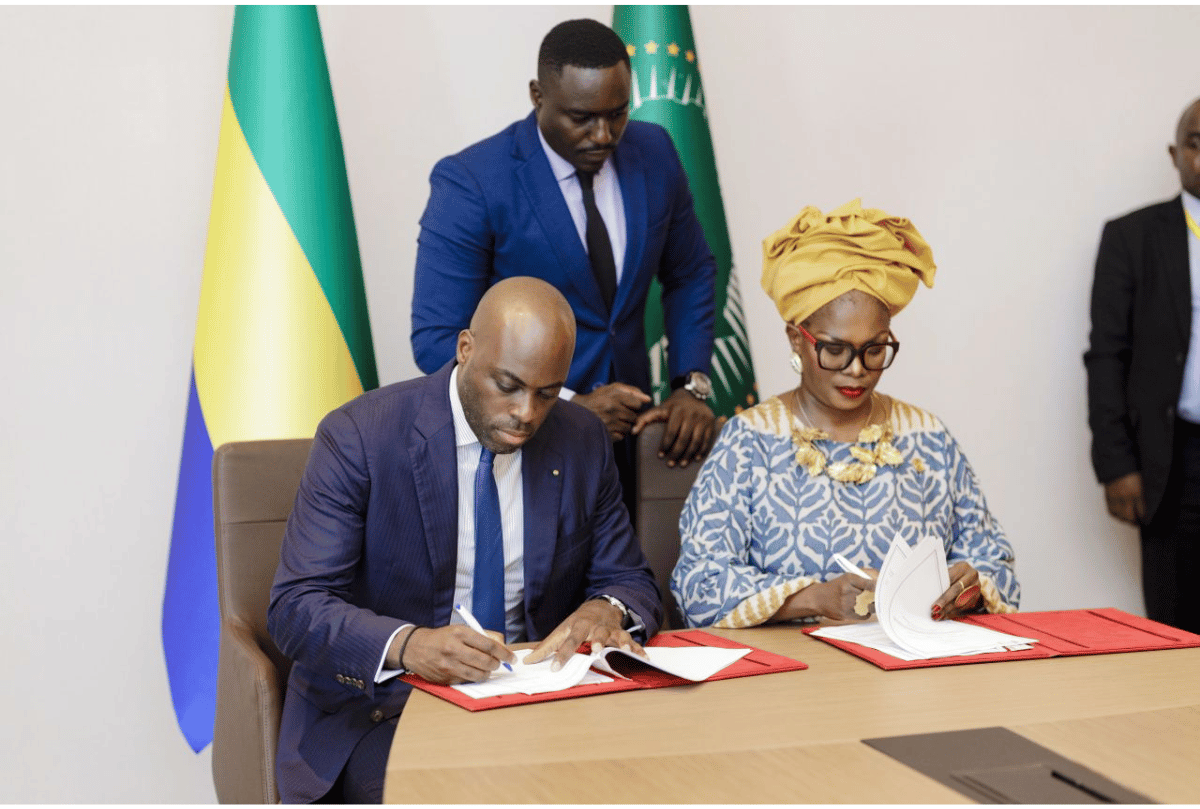
The African Union has told its member states that the continent can no longer afford to stand on the receiving end of the digital revolution. Speaking at a ministerial meeting in Libreville on Thursday, October 29, AU Commissioner for Infrastructure and Energy Lerato D. Mataboge called for stronger African artificial intelligence capabilities, tighter cybersecurity and sturdier digital infrastructure. She also urged governments to help write the global rules for emerging technology rather than simply live under them.
Mataboge addressed the ministerial session of the Sixth Ordinary Session of the Specialised Technical Committee on Communication and Information and Communication Technology (STC-CICT). According to Citizen Digital’s report on the address, she described Africa as standing at a defining moment, with AI, data and digital platforms reshaping economies and societies. Her central argument was that Africa must steer that change according to its own priorities and make sure its benefits reach all Africans. “Africa must not remain a consumer of the global digital revolution,” she said.
A priority list with sovereignty at the centre
The Commissioner’s remarks put digital sovereignty and local technological capacity at the heart of the AU’s digital agenda. The priorities she outlined were:
- Affordable internet connectivity, so that more people can get online at a cost they can bear.
- Cybersecurity, to protect governments, businesses and citizens as more of daily life moves onto digital systems.
- Digital identity interoperability, meaning identity systems that can be recognised and trusted across national borders.
- Data governance, or the rules that decide who controls African data and how it can be used.
- African AI capabilities, including the skills and tools to build technology on the continent rather than only import it.
The wider agenda also covers digital skills, innovation and strategic communication, with the stated aim of building an integrated, competitive and inclusive African digital economy. Mataboge tied the priorities to the AU’s Agenda 2063 and the Digital Transformation Strategy for Africa 2020 to 2030.
From strategy to delivery
The most pointed part of her message was aimed at the ministers in the room. Mataboge urged them to move beyond adopting strategies and concentrate on implementation, measurable targets and effective monitoring. She said the meeting’s success would be judged not by how many documents it adopts but by the decisions carried out, the investment mobilised and the difference made in people’s lives.
She also acknowledged that the agenda will need sustained investment, stronger partnerships and financing mechanisms that let member states lead on delivery. She thanked development and technology partners, among them the World Bank, the European Union, Google, GIZ and GSMA, while stressing that the agenda must remain African owned.
The ambition sits against a demanding backdrop. Innovation Village’s October roundup of African AI developments notes that Africa holds 18 percent of the world’s population but only 0.6 percent of global data centre capacity. Earlier this month, the World Bank’s Africa Economic Update, reported by Reuters, argued that the region’s realistic path runs through practical, low-cost AI applications on affordable devices, since Africa lacks the capital and infrastructure to compete head on with larger economies.
The road to Doha
A key item before the committee was Africa’s preparation for the International Telecommunication Union’s Plenipotentiary Conference (PP-26), which runs from November 9 to 27 in Doha, Qatar. The conference meets every four years, sets the ITU’s overall direction, approves its strategic and financial plans and elects its top officials and its 48-seat Council.
Mataboge said African countries need to coordinate their positions and speak with one voice on telecommunications, digital inclusion, infrastructure investment and global digital governance. In her words, as reported, Africa should go to Doha intending to influence decisions, not merely to attend.
Much of that coordination is already under way. Under the African Telecommunications Union, the continent held a preparatory meeting in Abidjan in September to settle common positions. Regional reporting on that meeting noted that the resulting texts are meant to serve as the basis for Africa’s stance in Doha, though they are not ITU decisions in themselves.
Rules for digital platforms
Ministers also considered the Algiers Declaration on Fair, Safe and Responsible Digital Platforms in Africa. Mataboge said digital platforms are now central to economies, communication and public life, which calls for policies that encourage innovation while protecting users and fundamental rights. She called for a digital environment in which African businesses and content creators can take part fairly, and in which platforms are encouraged to act responsibly.
What to watch
The Libreville session produced a clear statement of intent, not a binding set of commitments, and the Commissioner herself set the bar by which it should be measured: delivery. Three questions will shape how far the agenda travels. The first is how it will be financed, given the scale of the infrastructure gap. The second is how the push for sovereignty sits alongside reliance on outside partners, a balance the AU says it will manage through African ownership. The third is whether Africa’s common position holds once negotiations begin in Doha.
The first real test arrives within weeks, when delegations take their seats in Qatar.
This report draws on Citizen Digital’s coverage of the Libreville session, ITU materials on PP-26, Innovation Village, Reuters and regional reporting on the African preparatory process.