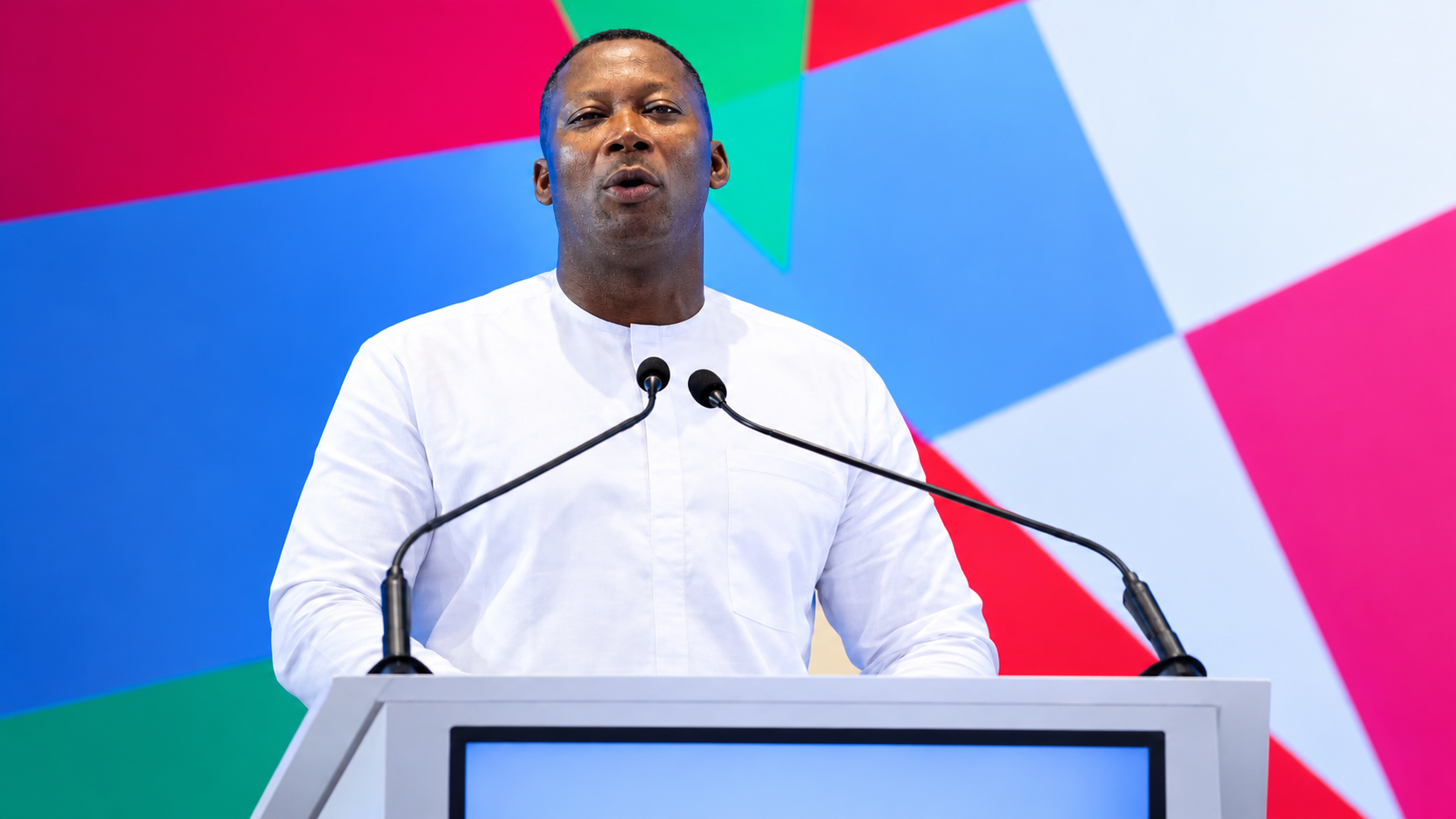
At Build 2026 in Abuja, Dr Olubunmi Ajala highlighted electricity supply as a major constraint on Nigeria’s AI infrastructure ambitions, explaining the rationale behind a proposed Nigeria-Togo data centre initiative.
ABUJA, Nigeria
Nigeria’s persistent electricity challenges are emerging as a major obstacle to its ambitions to expand artificial intelligence infrastructure, prompting proposals for cross-border collaboration that could leverage electricity resources in neighbouring countries.
At Build 2026, Africa’s Shared Compute and AI Infrastructure Conference, held in Abuja on October 21 and 22, Dr Olubunmi Ajala, Director of the National Centre for Artificial Intelligence and Robotics (NCAIR), highlighted infrastructure constraints affecting the development of Nigeria’s AI ecosystem.
Ajala represented the Minister of Communications, Innovation and Digital Economy, Dr Bosun Tijani, who was unable to attend the conference.
One of the key proposals discussed was the development of data centre infrastructure connecting Nigeria and Togo, with the aim of taking advantage of electricity availability in Togo to address some of the energy challenges associated with operating data centres in Nigeria.
The proposal highlights a fundamental issue facing Nigeria’s AI ambitions: developing advanced computing infrastructure requires not only significant financial investment but also a reliable, continuous electricity supply.
For AI infrastructure, where computing equipment must operate for extended periods and cooling systems must run continuously, unreliable power can significantly increase operating costs and complicate project development.
Electricity challenges complicate Nigeria’s AI ambitions
Electricity supply is a critical consideration in the development of data centres, which house the servers and specialised computing equipment used to store information, run digital services and power artificial intelligence applications.
These facilities require reliable electricity around the clock. Interruptions can disrupt services, while operators must invest in backup generators, battery systems and other power infrastructure to maintain operations.
In Nigeria, persistent electricity supply challenges create additional costs for businesses that depend on uninterrupted power. Data centre operators must consider not only the cost of electricity from the grid but also the expense of maintaining alternative power sources and cooling systems.
These requirements can make data centre development more expensive and affect the commercial viability of large-scale computing projects.
During his remarks at Build 2026, Ajala identified electricity as one of the infrastructure constraints affecting efforts to develop Nigeria’s AI capabilities.
The challenge is particularly significant as demand grows for computing capacity to support AI research, model development and the deployment of AI-powered services.
Without reliable and affordable electricity, expanding domestic computing infrastructure could become more difficult, potentially increasing dependence on facilities operated elsewhere.
Why Togo features in the proposed solution
The proposed Nigeria-Togo data centre initiative reflects an attempt to address the electricity challenge through regional cooperation.
Rather than treating electricity supply as a problem that Nigeria must solve entirely within its borders before expanding AI infrastructure, the proposal considers how neighbouring countries could contribute to the development of shared computing facilities.
According to the rationale discussed at the conference, Togo’s electricity availability could provide an advantage for infrastructure that requires a dependable power supply, while Nigeria could benefit from improved access to computing capacity.
The approach could create opportunities to develop infrastructure serving businesses, researchers and technology companies across national borders.
However, the proposal’s practical feasibility will depend on several factors, including the availability of sufficient electricity, the cost of power, the location of the facilities, cross-border connectivity and the arrangements governing ownership and operation.
The claim that Togo has uninterrupted electricity should also be treated cautiously until supported by independently verifiable data. The proposal’s underlying rationale is the potential to leverage more reliable or accessible power resources, not an established finding that every part of Togo enjoys uninterrupted electricity.
Details of the proposed project’s financing, implementation schedule, capacity and operational structure have not yet been established publicly.
The high cost of keeping data centres running
Building a data centre involves more than constructing a facility and installing servers.
Operators must invest in power distribution systems, cooling equipment, network connections, security, backup electricity and other systems needed to maintain reliable operations.
AI-focused facilities can be especially demanding because advanced computing processors consume substantial amounts of electricity and generate significant heat.
If the main electricity supply is unreliable, operators must provide alternative sources of power and design systems capable of maintaining operations during interruptions.
These additional requirements increase capital and operating expenditure.
For Nigeria, the challenge raises an important question about how to expand computing infrastructure without allowing electricity costs to undermine the competitiveness of local AI businesses.
A cross-border model that can secure reliable and economically viable electricity could offer an alternative, provided that the costs of connecting, operating and maintaining the infrastructure are manageable.
It would not eliminate the need to improve Nigeria’s domestic electricity system, but it could offer another route for expanding AI computing capacity while broader power-sector challenges persist.
Shared computing infrastructure and Africa’s digital sovereignty
The electricity discussion formed part of a wider conversation at Build 2026 about how African countries can develop the infrastructure needed to participate more actively in the global AI economy.
The conference focused on three broad priorities: infrastructure, economics and digital sovereignty.
Digital sovereignty concerns the ability of countries and institutions to exercise meaningful control over their digital infrastructure, data and technology systems.
For African countries, this includes questions about where computing infrastructure is located, who owns it, how data is governed and whether local researchers and businesses can access the resources they need.
The conference also explored the possibility of African countries pooling computing resources to support AI research and development.
Such an approach could allow participating countries to share access to expensive computing infrastructure rather than requiring each country to independently build facilities capable of supporting every type of AI workload.
However, regional cooperation would require clear agreements on electricity costs, infrastructure ownership, data protection, cybersecurity, access to computing resources and the responsibilities of participating governments.
The long-term value of these arrangements would depend on whether they deliver affordable computing capacity while preserving the ability of African institutions to determine how their data and technology systems are governed.
Turning the proposal into an operational project
The proposed Nigeria-Togo data centre initiative presents a potential response to one of the practical constraints facing Nigeria’s AI ambitions.
Its significance lies in recognising that the development of AI infrastructure depends on more than software, research funding and technical expertise. Reliable electricity is a foundational requirement.
For the proposal to advance, stakeholders will need to clarify how the facility would be financed, where it would be located, how electricity would be supplied and what arrangements would govern its operation.
They will also need to establish whether the infrastructure would serve Nigerian businesses alone or support a wider regional market.
These questions will determine whether the initiative can move from a conference proposal to a commercially sustainable project.
For Nigeria, the broader challenge remains finding ways to expand access to computing resources while addressing the electricity constraints that make large-scale digital infrastructure expensive to operate.
The discussions at Build 2026 suggest that regional cooperation could form part of that response. Whether the Nigeria-Togo proposal delivers on that potential will depend on the practical arrangements that follow.