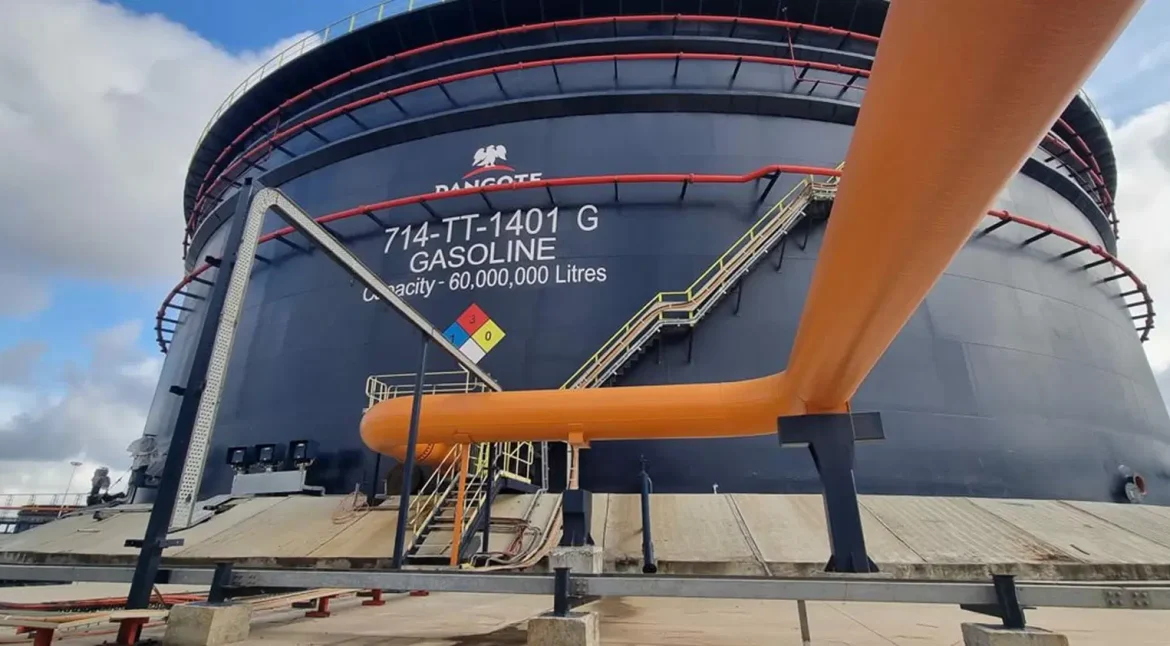
Honeywell Technologies has announced the launch of a new industrial artificial intelligence platform at the Dangote Petroleum Refinery in Lekki, Lagos, in a move that could strengthen the application of AI in Africa’s energy and manufacturing sectors.
The platform, known as Forge Plant Cognition, is designed to improve refinery operations by combining artificial intelligence, industrial automation, real-time operational data and engineering expertise. Developed with AI and accelerated computing capabilities from NVIDIA and infrastructure from Dell Technologies, the technology aims to help industrial operators improve productivity, identify production bottlenecks and reduce operational inefficiencies.
Announced on October 26, 2026, the initiative makes Dangote’s refinery the first industrial facility selected for the launch of the platform, according to Honeywell.
Honeywell estimates that the AI-powered system could generate more than $60 million in annual gross operational benefits for the refinery when it reaches full-capacity throughput. The projection is based on preliminary estimates suggesting that the technology could deliver operational benefits exceeding 29 cents per barrel processed.
However, the company clarified that the projected financial benefits are not guaranteed and exclude the cost of implementing the platform. Actual results will depend on operating conditions, refinery utilisation, production performance and other factors.
How the AI Platform Will Transform Refinery Operations
Unlike conventional AI applications that primarily analyse information and generate recommendations, Forge Plant Cognition is designed to combine real-time operating data with engineering knowledge, industrial process expertise and physics-based models to support operational decisions.
The platform will integrate data from the Dangote refinery with Honeywell’s process engineering capabilities, helping operators identify constraints affecting production, anticipate potential equipment problems and make more informed decisions.
Honeywell said the technology will focus on three major areas of industrial operations.
The first is improving production efficiency by identifying bottlenecks across interconnected refinery processes. This could help operators optimise throughput, improve product yields and maximise the value generated from existing assets.
The second involves equipment reliability and production protection. By detecting emerging equipment and process issues, the platform is designed to alert operators to potential problems and recommend corrective actions before they lead to costly interruptions or unplanned downtime.
The third focuses on making specialised industrial knowledge more accessible. By embedding engineering expertise into AI-powered workflows, the system aims to help refinery engineers and operators make faster and more consistent decisions.
NVIDIA and Dell Technologies Power the Platform
The development brings together three major technology companies to apply advanced AI capabilities to large-scale industrial operations.
NVIDIA provides the AI models, accelerated computing technologies and digital twin capabilities supporting the platform, while Dell Technologies supplies the AI infrastructure through its Dell AI Factory with NVIDIA.
Among the technologies being used are NVIDIA Nemotron models, which power AI agents designed to interpret industrial operating data.
The platform will also use NVIDIA Omniverse libraries to create digital twins of the refinery and its processes. These virtual representations can help engineers simulate operating conditions, test scenarios and plan operational improvements.
Additionally, NVIDIA Cosmos models and the Metropolis Video Search and Summarisation Blueprint will support vision-based AI capabilities for detecting anomalies and generating real-time alerts.
NVIDIA’s PhysicsNeMo framework will also be used to develop and train physics-based AI models that can support industrial optimisation.
Together, these technologies are intended to help bridge the gap between traditional industrial automation and more intelligent, AI-supported refinery operations.
Developing Nigerian Engineering Talent
Beyond improving production efficiency, the partnership is expected to contribute to the development of local technical expertise within Nigeria’s energy industry.
According to Honeywell, Forge Plant Cognition will help Nigerian engineers and refinery operators access specialised process knowledge through AI-powered tools, potentially accelerating troubleshooting and improving their ability to manage complex industrial systems.
David Bird, Chief Executive Officer and Managing Director of Dangote Petroleum Refinery and Petrochemicals FZE, said the decision to adopt the platform reflects the company’s commitment to operational excellence, technological advancement and developing Nigerian talent.
He noted that the technology would help the refinery optimise performance, unlock greater value from its operations and strengthen the capabilities of its workforce.
The initiative also supports Dangote’s ambition to build a workforce comprising 70 per cent Nigerians as the refinery expands its operations.
By making specialised engineering knowledge more accessible, the company hopes to strengthen the capabilities of local personnel and gradually reduce reliance on external technical expertise.
Part of Dangote Refinery’s Expansion Plans
The introduction of industrial AI comes as Dangote continues to pursue plans to significantly increase the refinery’s production capacity.
Honeywell disclosed that it is also supporting the refinery’s ambition to expand its capacity from 650,000 barrels per day to 1.4 million barrels per day within three years, through the optimisation of existing assets and improvements to operational processes.
The capacity expansion is a separate initiative from the Forge Plant Cognition deployment, although both projects reflect the refinery’s broader ambition to increase production and improve operational performance.
If successfully implemented, the AI platform could play a role in helping the facility manage increasingly complex operations as its production capacity grows.
What This Means for Africa’s Industrial AI Future
The deployment represents an important development in Africa’s evolving AI landscape, where much of the public conversation has focused on generative AI, chatbots, digital services and AI-powered applications.
Industrial AI presents another dimension of the technology’s potential, particularly in sectors such as energy, manufacturing, mining, agriculture and infrastructure.
For African industries, applying AI to existing physical infrastructure could create opportunities to improve productivity, reduce operational losses, optimise energy consumption and strengthen technical capabilities.
Nigeria’s energy sector, in particular, could benefit from technologies that help operators manage complex industrial facilities more efficiently.
However, the long-term significance of the Dangote deployment will depend on measurable results, including improvements in production efficiency, equipment reliability, operating costs and the development of local technical expertise.
While Honeywell’s projected $60 million annual gross operational benefit offers an indication of the potential economic value, the actual financial impact remains to be demonstrated.
For now, the partnership places Nigeria at the centre of an important industrial AI development and provides an opportunity to examine how advanced artificial intelligence can be applied beyond digital platforms to transform the operations of major industrial facilities across Africa.