Nigeria’s Minister of Communications, Innovation and Digital Economy, Dr. Bosun Tijani, has underscored the need for countries to deliberately build skills, infrastructure and institutions if artificial intelligence is to deliver broad-based benefits rather than deepen existing divides.
In a post on X on October 5, 2026, Tijani shared a short video reflection drawn from a conversation at the World Bank several months earlier. “How do we turn artificial intelligence into shared prosperity? By building the skills, infrastructure and institutions that enable nations to put it to work for their people,” he wrote, accompanying a clip from the event titled “Building Capacity to Harness AI for Shared Prosperity.”
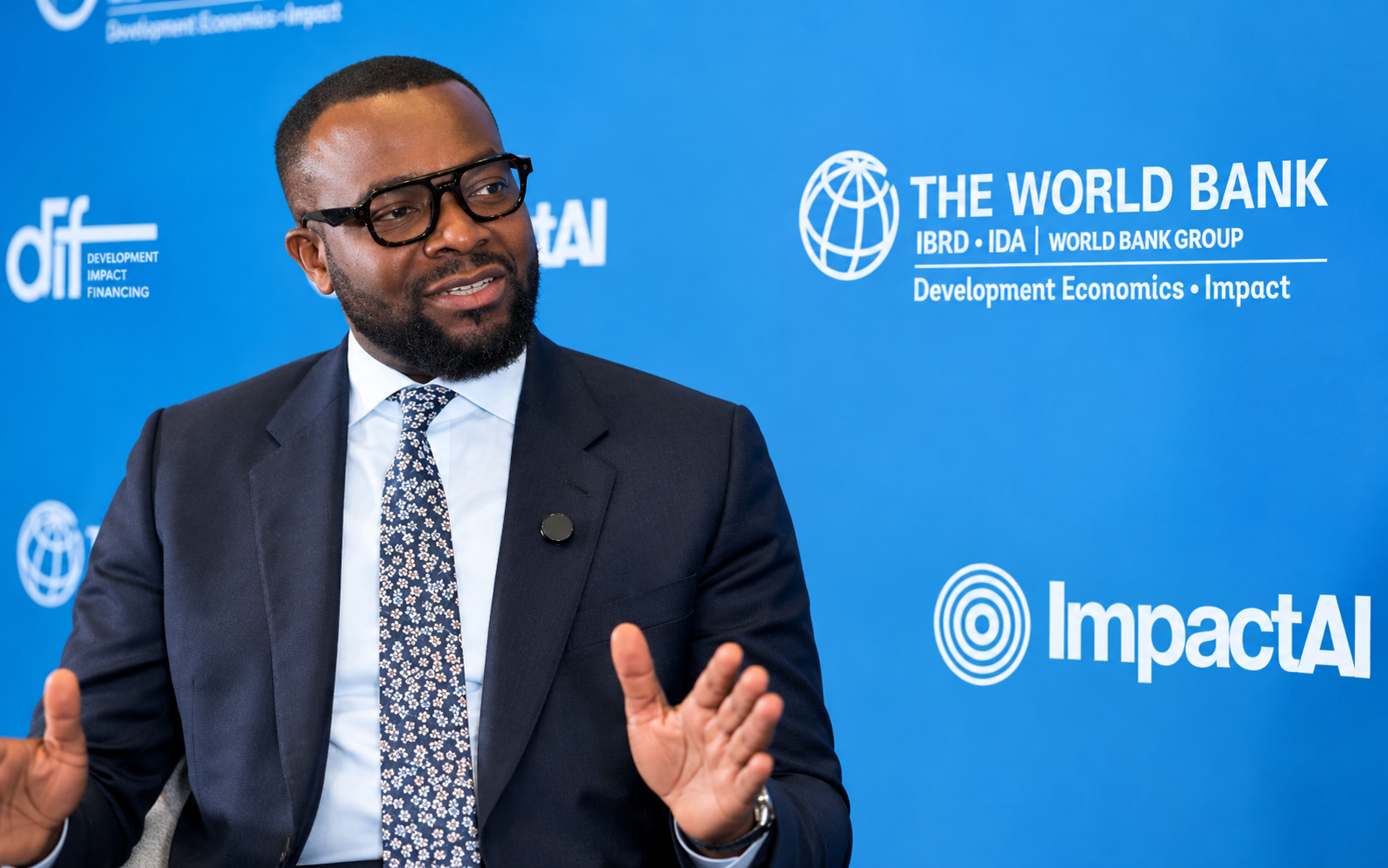
The roughly two minute video, produced in association with the World Bank’s ImpactAI initiative and Development Impact group, features Tijani speaking at a panel style discussion. He argues that the current moment is uniquely promising but requires deliberate preparation.
“I think we’re all blessed to live at a time,” Tijani says in the clip, before emphasising the importance of human capital: “because we want to ensure that we have a strong pool of people who can help us appropriate technology.” He stresses the concept of “absorptive capacity,” noting that societies must invest so that emerging technologies serve national needs rather than the reverse.
As a concrete example of infrastructure investment, Tijani highlights Nigeria’s prioritisation of expanding fibre-optic networks. “Which is why, for instance, we prioritized investing in 90,000 kilometres of fibre-optic network,” he states. The project, known as Project BRIDGE (Building Resilient Digital Infrastructure for Growth), aims to more than triple the country’s existing fibre backbone and is being implemented with support from development partners including the World Bank. Officials have indicated rollout of the additional fibre began or was scheduled to begin in late 2026, with ambitions to rank among the longest networks on the African continent once complete.
Tijani also points to institutional and human resource efforts within government. Referring to the digital team being built under his ministry, he says: “I think that team is becoming one of these strongest teams in digital in the whole world.” He frames AI as a transformative force: “Because this is a technology that will change a lot of fundamental things in our society,” and poses the broader question of how countries should prepare for its appropriation.
The remarks align with Nigeria’s wider digital strategy under Tijani’s leadership. This includes the National AI Strategy, the 3 Million Technical Talent (3MTT) programme aimed at equipping millions of Nigerians with technical skills, initiatives to digitise government operations and local data, and partnerships on AI applications in sectors such as healthcare, agriculture and education. Tijani has previously been recognised internationally, including on TIME’s 100 Most Influential People in AI list, for these efforts.
The World Bank event at which the conversation took place formed part of broader discussions on science and AI for development impact, including the launch and promotion of ImpactAI an AI tool designed to help policymakers access and synthesise rigorous evidence from impact evaluations. The video ends with a call to learn more at impactai.worldbank.org.
Tijani’s message reflects a common theme in development discourse: that AI’s potential for inclusive growth depends less on the technology itself than on the readiness of nations particularly developing ones to absorb, adapt and govern it effectively. Nigeria’s dual focus on large-scale connectivity upgrades and talent pipelines represents one country’s attempt to position itself accordingly.