Three commitments, from a continental cable operator, a global technology giant and a G7 government, are shaping how Africa will connect to the AI economy and who will build it. SEACOM is planning a new subsea cable system for the Indian Ocean Basin. Google has promised four cable connectivity hubs across the continent, along with fresh money for AI research at African universities. Japan has pledged to help train 30,000 AI experts. Together they point to the same conclusion: the race to power Africa’s AI future is being run on two tracks at once, the pipes that carry data and the people who put it to work.
SEACOM 2.0: a cable built for AI traffic
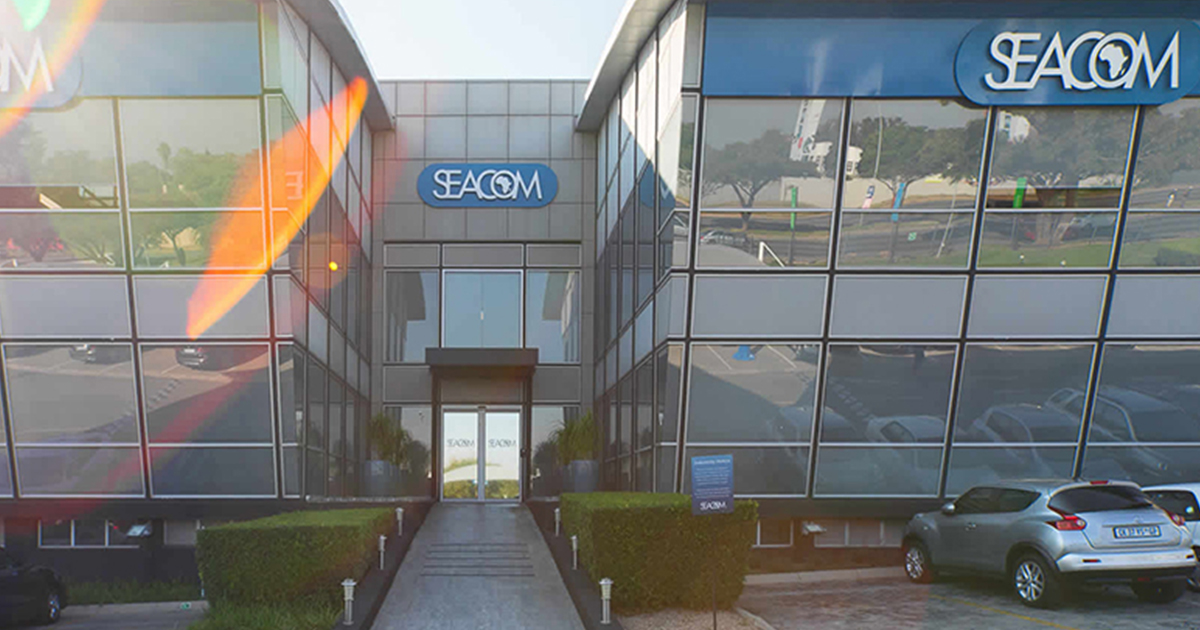
SEACOM, the operator that launched Africa’s first privately owned subsea cable in 2009, unveiled SEACOM 2.0 in September 2025 at Submarine Networks World in Singapore. The planned system stretches roughly 25,000 kilometres, linking Singapore directly to South Africa, running up the Indian Ocean coast through the Red Sea corridor and ending in Marseille, France. It also adds a westward loop around South Africa to Lobito in Angola, along with new landing stations in East Africa.
The headline specification is 48 fibre pairs and a design capacity of about two petabits per second, which would make it one of the highest-capacity submarine systems ever built. SEACOM says its landing stations will act as “AI communication nodes” that connect African nations’ sovereign AI infrastructure to global data hubs, and it expects networks to carry more than 10 billion AI agents by 2030.
Resilience is part of the pitch. SEACOM’s existing cable was cut in the Red Sea in 2024 and took about five months to repair because of regional instability. The new route is designed to avoid Yemeni waters and to add diversity closer to African shores through carrier-neutral landing points. Group CEO Alpheus Mangale has described connectivity as “the oxygen of the digital and AI age.”
The project is still on the road to construction. Reporting from TechCentral put the build cost at between $1.5 billion and $2 billion, with SEACOM targeting financial close in the fourth quarter of 2026 and existing shareholders, including Remgro and Convergence Partners, agreeing to take part in the fundraising. The CEO has said the cable should go live in late 2029 or early 2030. Whether the financing has closed is the question to watch in the coming weeks.
Google’s four hubs and the university pipeline
Google’s announcement, made in September 2025, covers four subsea cable connectivity hubs in the north, south, east and west of Africa. They build on the company’s Africa Connect programme, which already includes the Equiano cable along the western seaboard, a Google Cloud region in Johannesburg and the Umoja route, billed as the first fibre link to connect Africa directly with Australia. Umoja is expected to enter service in 2027, running through Kenya, Uganda, Rwanda, the Democratic Republic of the Congo, Zambia, Zimbabwe and South Africa.
Google has not published the exact hub locations. Alex Okosi, the company’s Africa managing director, told Bloomberg TV that the facilities, which will include landing stations and data centres, should be completed within about three years. Press reports said the hubs would serve at least 18 countries. Google also says its investments have helped 100 million Africans get online for the first time and that Equiano alone is expected to lift Nigeria’s real GDP by an estimated $11.1 billion and South Africa’s by $5.8 billion. Those are the company’s own projections.
The infrastructure comes paired with a talent play. Google said it has put more than $17 million into funding, curriculum, training, compute and access to advanced AI models for African universities and research institutions over four years, and plans a further $9 million. It is also offering students in several African countries a free one-year subscription to its Google AI Pro plan.
Japan’s 30,000-expert pledge
Where SEACOM and Google are building physical networks, Japan is investing in people. At the ninth Tokyo International Conference on African Development (TICAD 9) in Yokohama in August 2025, then Prime Minister Shigeru Ishiba pledged support for training 30,000 AI professionals in Africa over three years, a target that runs to about 2028. The Japan International Cooperation Agency (JICA) is charged with delivering it, working with the top 20 to 30 African universities and with courses developed alongside Professor Yutaka Matsuo of the University of Tokyo.
The pledge sits within a wider package that also includes training for 300,000 people in other fields, among them 35,000 in health care, and $5.5 billion in development loans. It responds to a stark gap: Africa is projected to have a $16 billion AI market within five years, yet it holds only around 1 percent of global AI talent, according to figures cited by TechCabal. Analysts also read the programme as part of Japan’s effort to compete for influence on the continent as China expands its presence.
Two tracks, one test
The commitments complement one another. A cable with two petabits of capacity does little for a country that lacks engineers to build and run AI systems, and a trained workforce has limited reach without affordable, resilient bandwidth and local data centres. Taken together, the three announcements address both constraints.
The harder questions are about delivery. Subsea cables are capital-intensive and vulnerable to geopolitics, as the Red Sea repairs showed. Google’s hub sites remain undisclosed. And a pledge to train 30,000 experts will be judged on whether graduates find work on the continent rather than leaving for jobs abroad, and on whether African institutions shape the curriculum rather than receive it.
For African governments, the opportunity is to turn these foreign and corporate commitments into local capability, through open access to landing stations, data-centre partnerships and skills programmes tied to real jobs. The cables will be laid and the classrooms will fill. What remains open is how much of the value of Africa’s AI economy stays in Africa.