The pan-African ICT body says Africa risks becoming a consumer of artificial intelligence developed and hosted elsewhere unless governments and investors expand the continent’s computing capacity.
Africa must urgently invest in its own data centres, cloud infrastructure and computing resources or risk being left behind in the global artificial intelligence economy, the Technology Information Confederation Africa (TICON Africa) has warned.
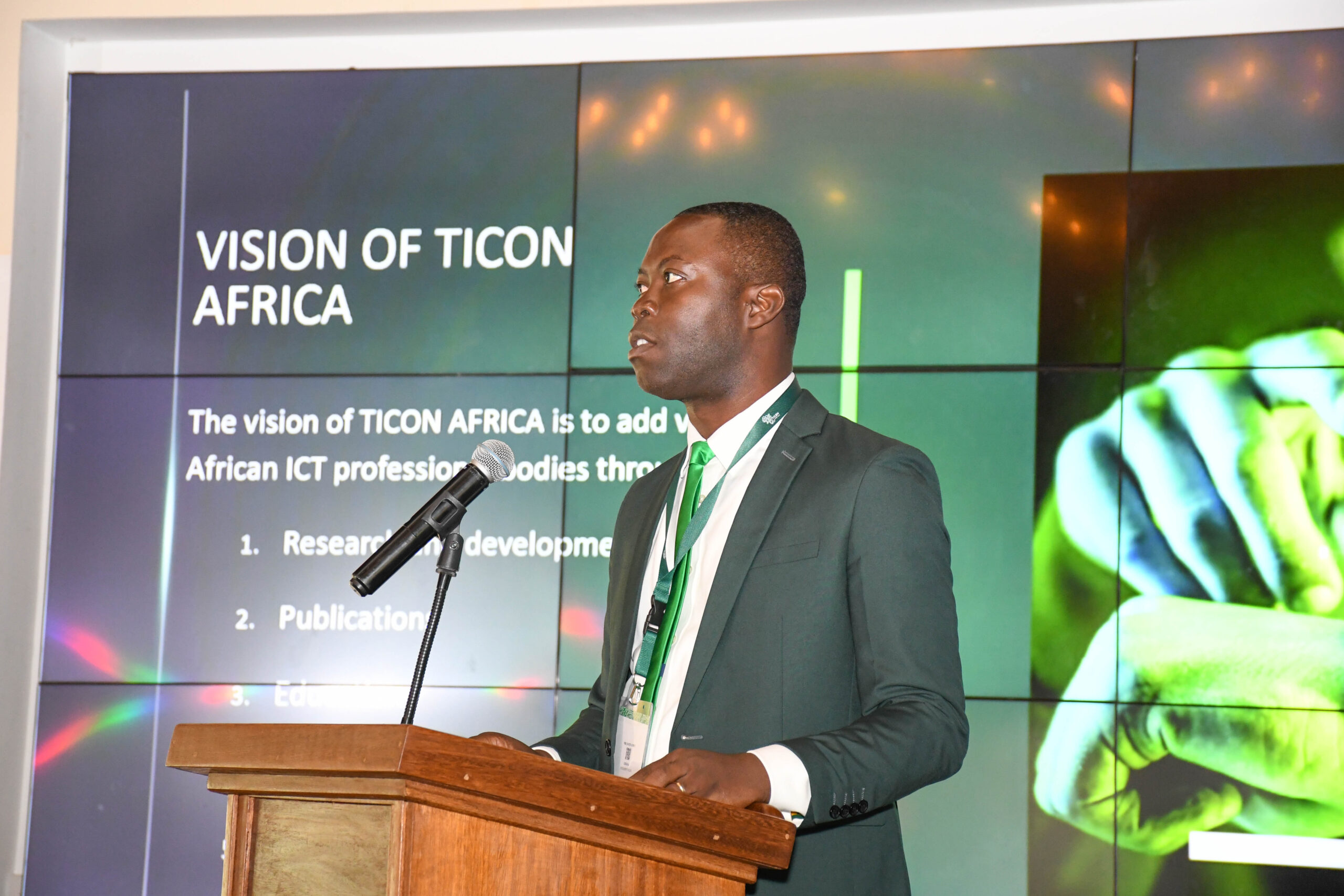
The warning, issued by TICON Africa President David Gowu and reported on November 10, 2026, comes amid renewed concerns about the stability of data centre expansion in the United States, where political uncertainty and electricity grid constraints are creating questions about planned infrastructure investments.
According to Gowu, Africa’s growing dependence on computing infrastructure located outside the continent could leave governments, businesses and technology developers exposed to decisions made in foreign markets.
He argued that meaningful participation in the global AI economy requires more than developing applications and digital products. African countries must also have access to the infrastructure needed to train, run and deploy artificial intelligence systems.
“Africa’s ability to participate meaningfully in the global AI economy will depend not only on its ability to develop AI applications, but also on access to the infrastructure needed to train, run and deploy them,” Gowu said.
Africa accounts for just 0.6% of global data centre capacity
The scale of the infrastructure gap remains a major concern for the continent.
According to the Africa Data Centres Association, Africa accounts for approximately 0.6 per cent of global data centre capacity, despite being home to around 20 per cent of the world’s population.
The association’s 2026 economic report puts the continent’s active data centre capacity at approximately 360 megawatts, with another 238 megawatts under construction and 656 megawatts in the planning pipeline.
Although these figures indicate growing investment, the report suggests that the expansion may only maintain Africa’s current share of global capacity rather than significantly improve its position.
The challenge could become more serious as demand for artificial intelligence services increases.
A 2025 report by technology consultancy Access Partnership, titled AI Beyond Data Centres, estimates that sub-Saharan Africa could face a 98 per cent gap between projected AI inference computing demand and available data centre capacity by 2030.
Inference computing refers to the processing power required to run AI models and generate responses after they have been developed or trained. As businesses, governments and consumers increasingly use AI tools, demand for this computing capacity is expected to grow.
Without sufficient local infrastructure, African organisations may have to rely heavily on computing resources provided by international technology companies.
US data centre uncertainty raises wider concerns
TICON Africa’s warning follows reports of a sell-off in US artificial intelligence and data centre stocks amid investor concerns about the political and regulatory environment surrounding infrastructure expansion.
According to reports, investors have raised questions about whether political developments following the US midterm elections could lead to tighter regulations affecting data centre development.
Swiss banking group UBS estimates that approximately 30 per cent of expected US data centre capacity additions by 2028 could be at risk because of political uncertainty and electricity grid bottlenecks.
For TICON Africa, the developments highlight the risks of relying heavily on infrastructure located in another region.
If construction projects are delayed, cancelled or become more expensive, countries and businesses that depend on foreign computing infrastructure could face higher costs, reduced access or disruptions to services.
Gowu warned that Africa risks becoming primarily a consumer of AI technologies developed and hosted elsewhere, paying foreign providers for services that depend on infrastructure over which the continent has limited control.
The concern is not limited to the United States. Africa’s broader dependence on overseas cloud and computing providers raises questions about the continent’s ability to control the infrastructure supporting its digital economy.
Data sovereignty and economic opportunities at stake
Beyond access to computing power, TICON Africa says the location of data storage and processing is becoming increasingly important as AI systems handle sensitive information belonging to governments, financial institutions, businesses and citizens.
When sensitive data is processed and stored outside a country, questions can arise over applicable laws, access rights, security arrangements and the ability of national authorities to enforce data protection requirements.
Developing local data centres and cloud infrastructure could give African countries greater control over how information is managed, although local hosting alone does not automatically guarantee data sovereignty. Strong data protection laws, cybersecurity standards and effective governance frameworks remain essential.
Gowu also argued that investment in local computing infrastructure could create wider economic benefits, including skilled employment, increased demand for energy and connectivity, and opportunities for African technology businesses.
Greater access to computing resources could also reduce barriers for start-ups, universities and researchers that currently face challenges accessing affordable processing power to develop and test AI systems.
He stressed that developing local capacity is not simply about data ownership but also about ensuring that African economies can participate in and capture economic value from the AI industry.
Electricity remains a major obstacle to Africa’s AI ambitions
However, building more data centres will require African governments and investors to address one of the continent’s most significant infrastructure challenges: reliable electricity.
AI data centres require substantial and consistent power to operate advanced processors, storage systems and cooling equipment. In countries where electricity supply remains unreliable, operating such facilities can be expensive and technically challenging.
The World Economic Forum has highlighted the growing relationship between electricity infrastructure and the expansion of AI data centres in Africa. It estimates that demand for data centre capacity across the continent could rise significantly by 2030, requiring substantial investment in electricity generation and transmission.
This creates a difficult balancing act for African countries. Governments must attract investment in digital infrastructure while ensuring that large data centre projects do not place additional pressure on already constrained electricity systems or shift infrastructure costs onto ordinary consumers.
Some emerging projects are attempting to address these challenges through partnerships involving telecommunications operators, technology companies and energy providers.
Vodacom Group, for example, has been exploring opportunities to develop AI-ready data centres in Egypt, South Africa and Kenya, while MTN has also announced plans to expand data centre infrastructure in Nigeria and South Africa.
These developments reflect growing recognition among African telecommunications and technology companies that computing capacity will become increasingly important to the continent’s digital economy.
Africa needs a coordinated approach to computing infrastructure
TICON Africa’s intervention adds to growing calls for African countries to move beyond being consumers of foreign AI products and strengthen their ability to develop, host and deploy their own technologies.
However, achieving this will require more than constructing individual data centres. Governments will need to create investment-friendly policies, improve electricity infrastructure, strengthen regional connectivity and establish effective data governance frameworks.
There may also be opportunities for African countries to collaborate by developing shared computing facilities and regional cloud infrastructure rather than each country attempting to build expensive facilities independently.
Such cooperation could help universities, researchers, start-ups and public institutions access computing resources at more affordable rates while supporting the development of AI systems that respond to African languages, industries and local challenges.
For Africa, the question is no longer simply how quickly the continent can adopt artificial intelligence, but whether it can build and control enough of the infrastructure required to benefit from it.
As global competition for computing power intensifies, TICON Africa’s warning highlights a growing strategic issue: without stronger local infrastructure, Africa risks allowing much of the economic value generated by its AI adoption to remain outside the continent.
For African governments and investors, expanding local computing capacity may therefore become as important as developing the AI applications themselves.